
"There's more to life": Our first Explore Parks camping trip at Pinecrest
Eleven young adults from Modesto spent three days in the Stanislaus National Forest and came home asking how to get back.
Robert hadn't left Stanislaus County in more than two years.
On the last morning of our camping trip at Pinecrest Lake, as the group gathered for a final reflection circle, he wanted to say something. "Thank you guys for allowing us to come out here," he told the staff. "Coming out here made me realize that there's more to life than just being in one place."
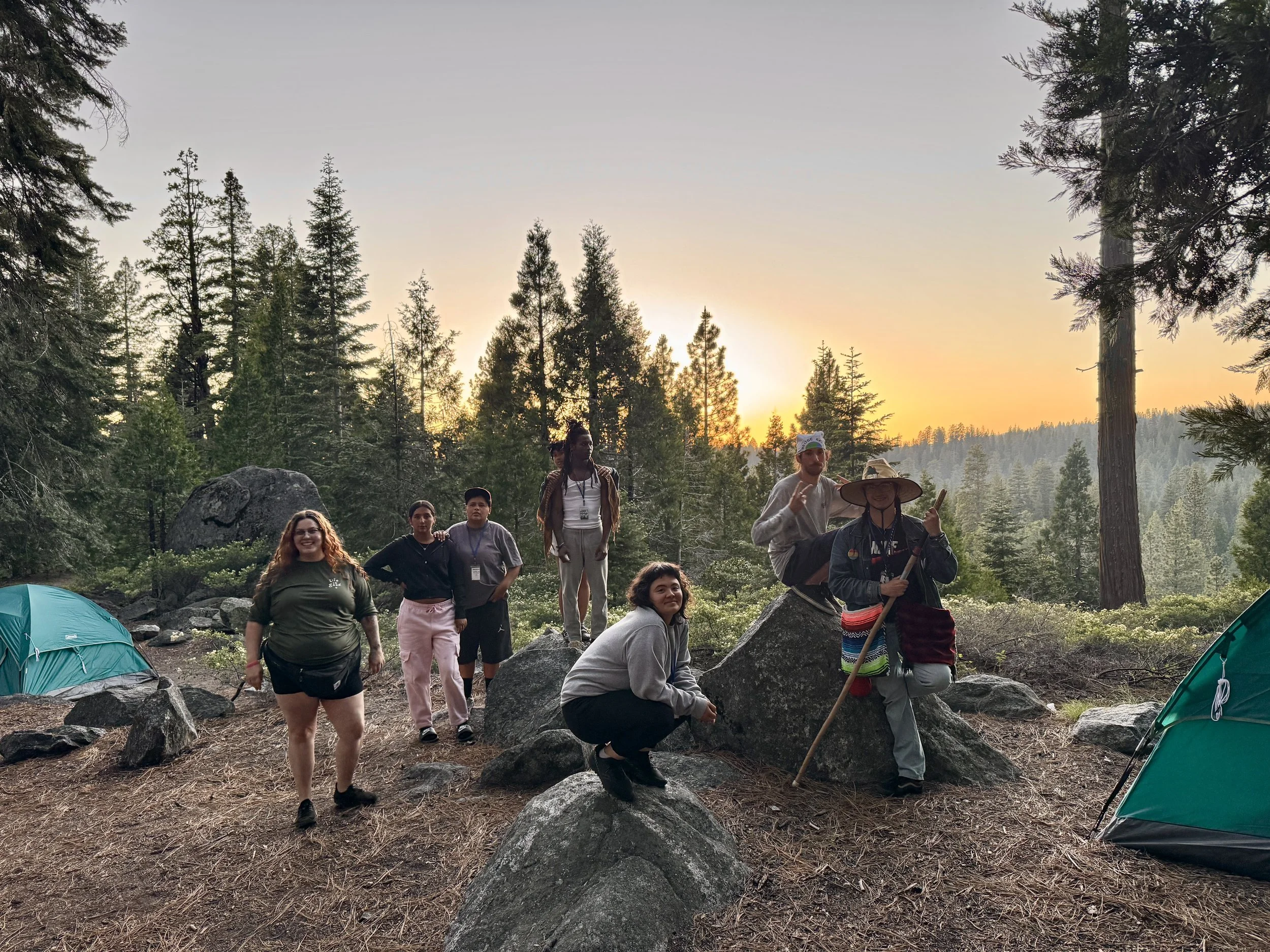
That's the heart of Explore Parks, our newest Central Valley program. In early June, we held its first camping trip — two nights and three days at the Pinecrest group campground in the Stanislaus National Forest — with eleven young adults, ages 18 to 24, from Center for Human Service's Youth Navigation Center, a Modesto shelter for young adults facing housing insecurity.
For most of them, everything was a first. First time camping. First time sleeping in a tent. First time kayaking, making s'mores, seeing the Sierra Nevada up close, or standing under a sky full of stars.
Removing every barrier
Explore Parks is largely funded through the California Natural Resources Agency's Youth Community Access grant program, part of the state's commitment to making the outdoors accessible for all Californians. That funding let us remove every barrier that keeps young people from places like Pinecrest.
The trip was completely free. We provided transportation, all meals, and brand-new camping gear — tents, sleeping bags, lanterns, and safety equipment purchased through the grant. Our team hitched up the camping trailer and the kayak trailer, and the whole crew caravanned up from the Central Valley into the pines.
Pinecrest also sits in a spot unique to our work: the area is split between two of the watersheds we protect, the South Fork of the Stanislaus River, which feeds the lake, and the North Fork of the Tuolumne. The group spent three days inside the very watersheds that help sustain their communities back home.
Building camp, building leaders
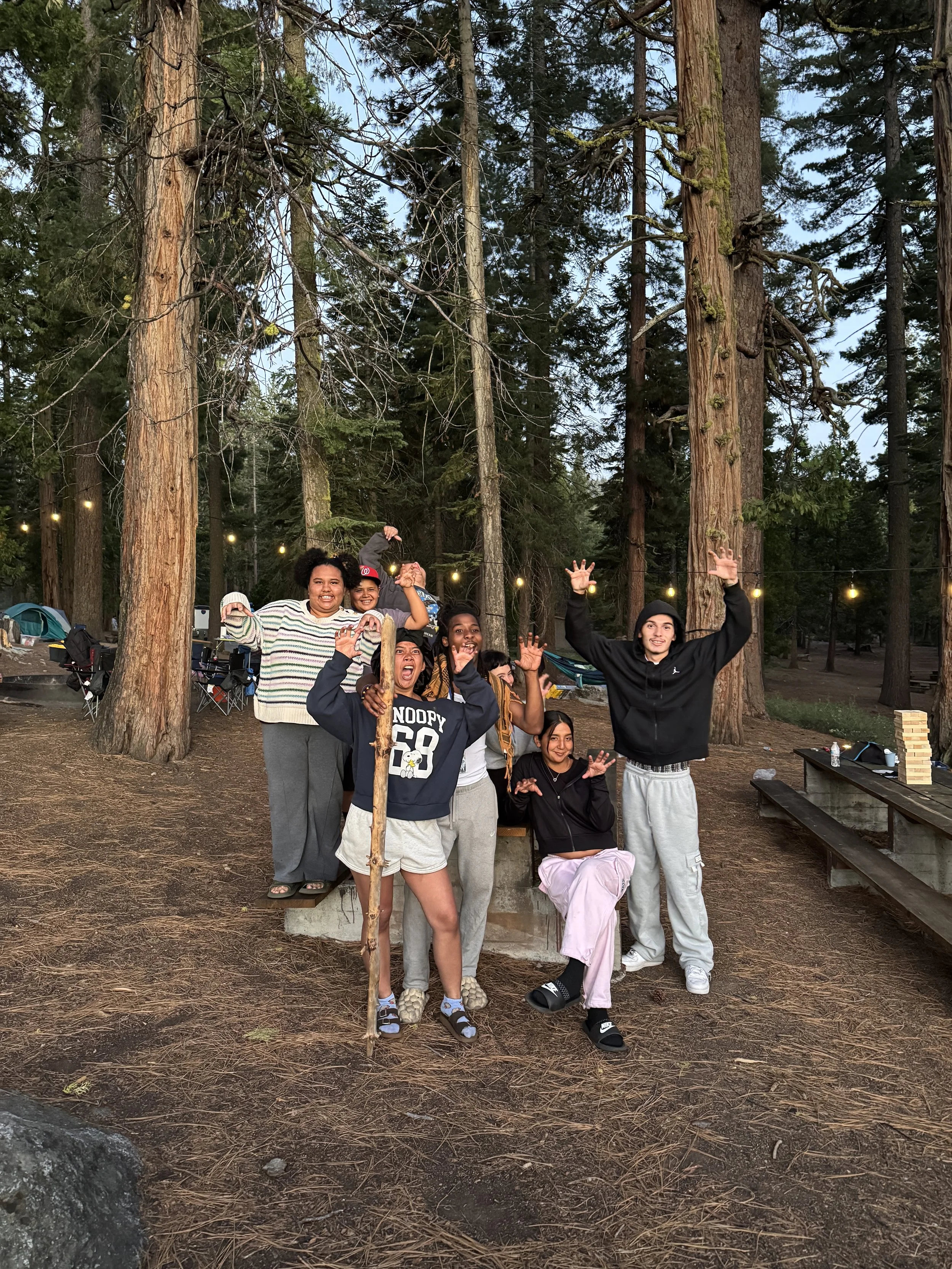
This program is about more than recreation. It's about building agency and leadership. Four participants stepped up as camp leaders, helping with equipment, organizing tasks, and guiding activities. Every meal had a rotating cooking team, serving team, and cleanup team, so everyone had a hand in making camp run.
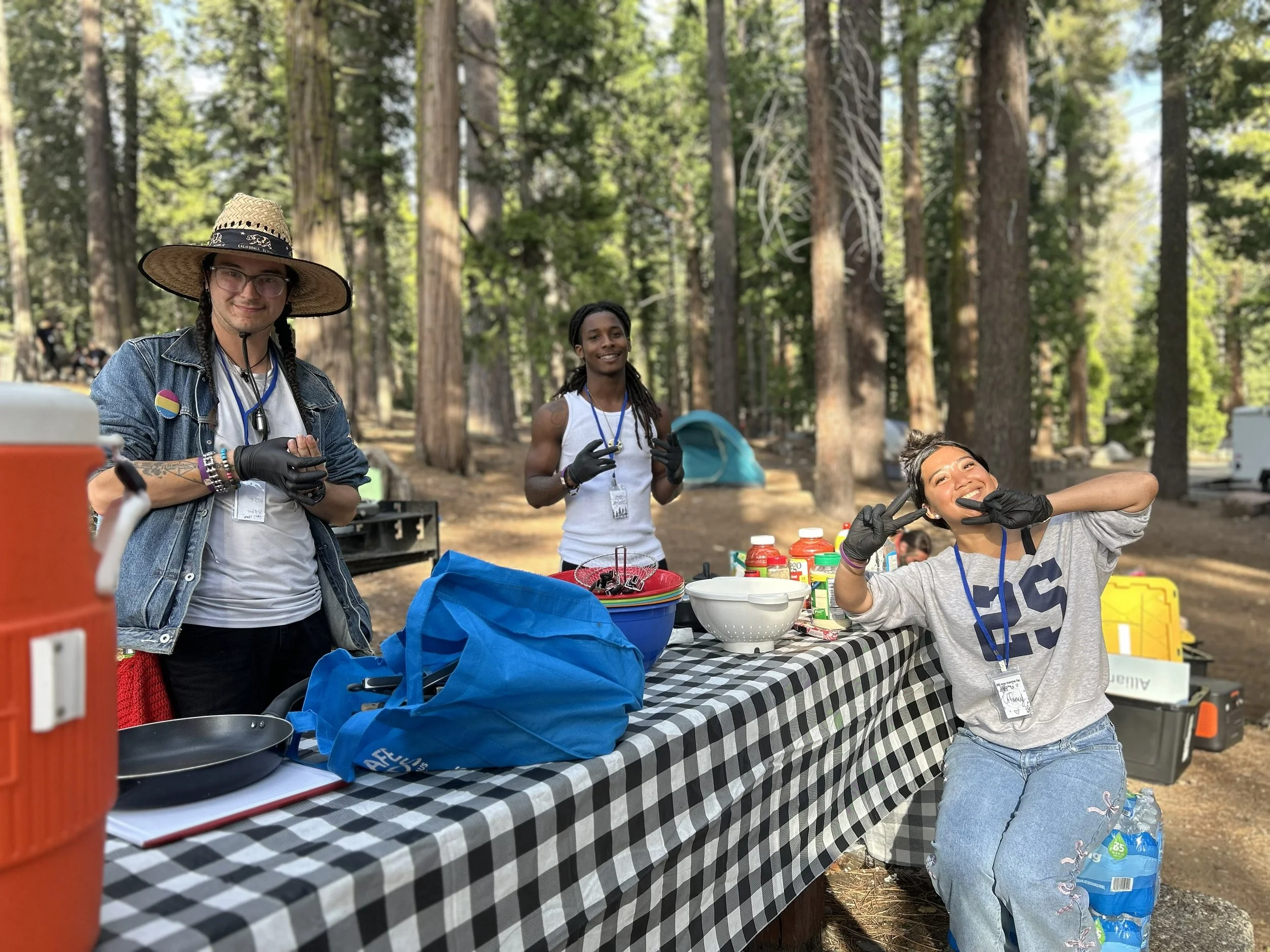
The laughter never stopped, not even during dishwashing.
When someone struggled with their tent, others stepped in to help. When the campfire came out, so did the s'mores, a first for a few in the group. And when the sun went down, the group discovered what a night sky looks like without city lights.
"My absolute favorite thing is just being out in nature," shared Rose, one of the participants. "Especially when it was nighttime, and I was just sitting on the rock outside my tent, looking at the stars, it was just absolute silence after a while."
A day on the water
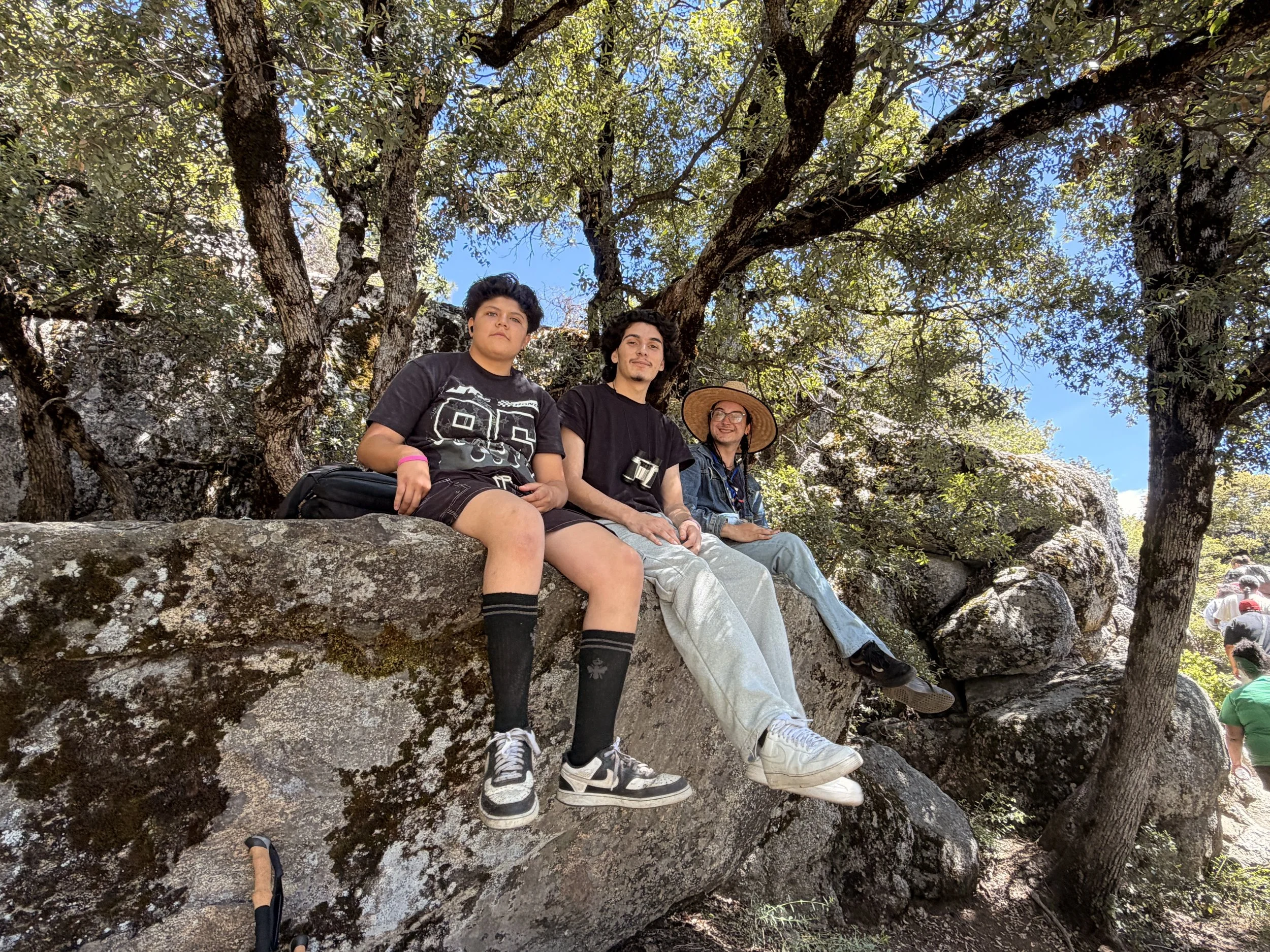
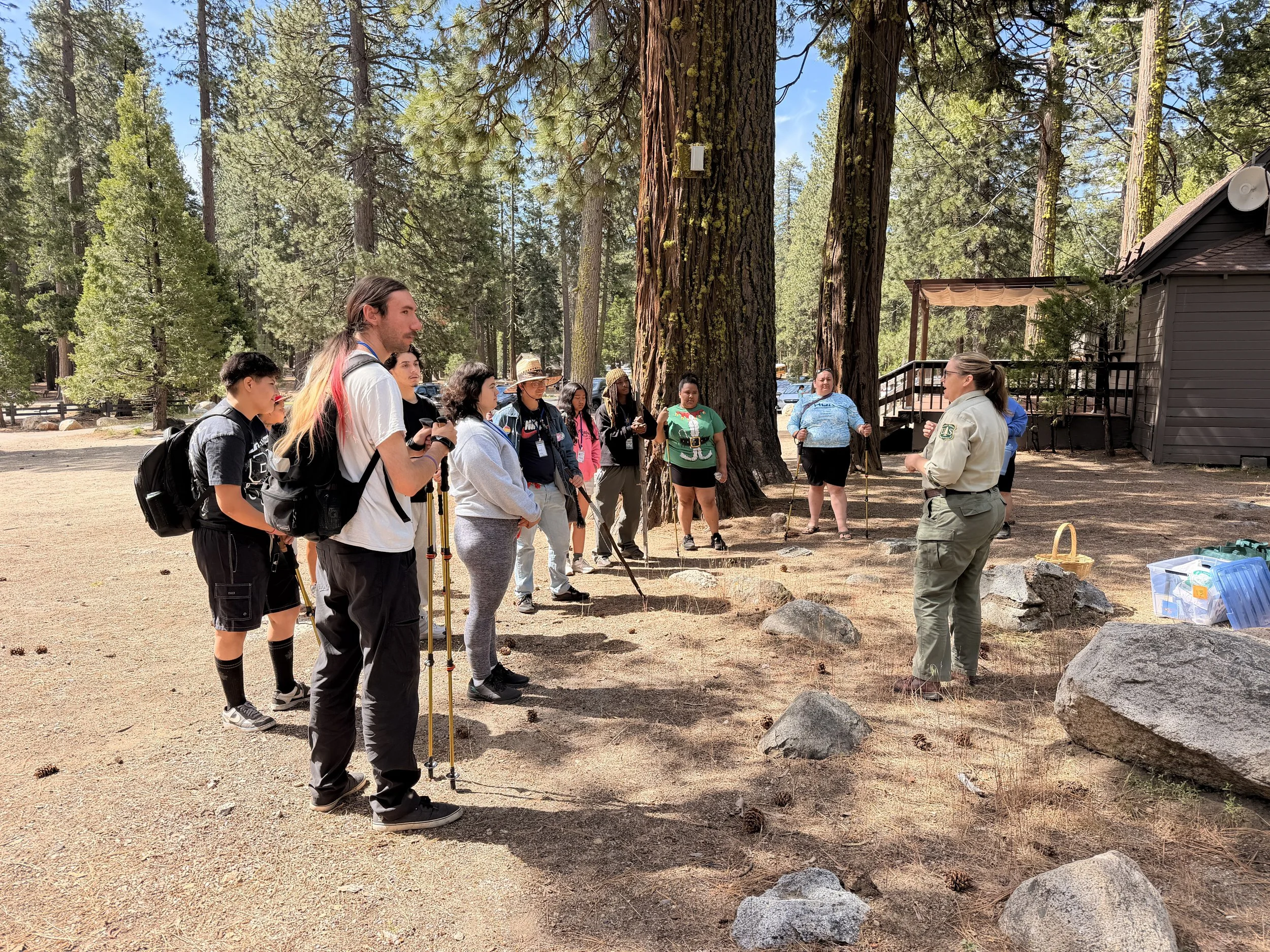
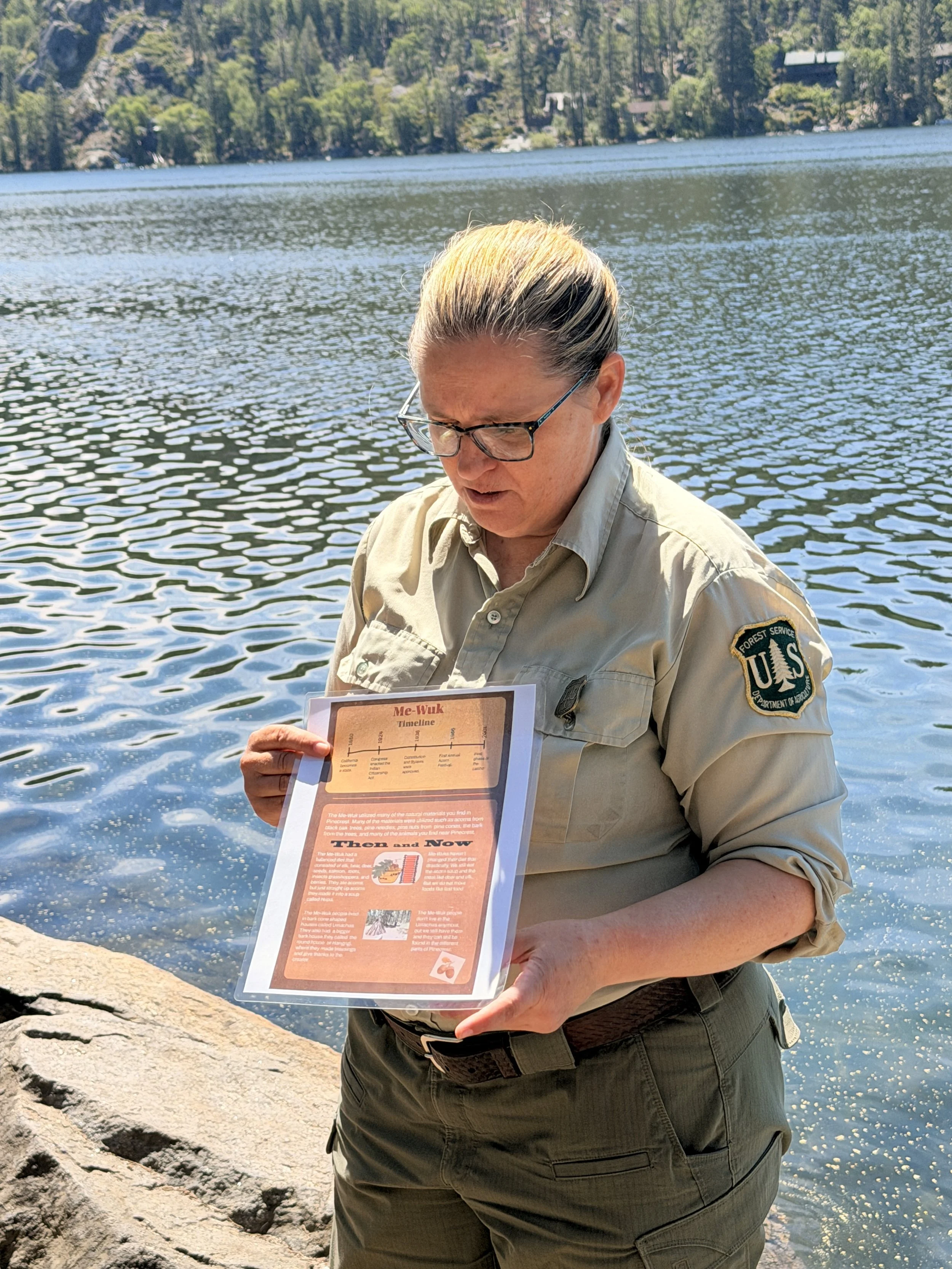
On day two, Genie Moore, Visitor Services Manager with the Forest Service at the Sugar Pine District, led the group on a hike along the dam, sharing how Pinecrest was formed and how granite tells the story of the Sierra. One participant later wrote that the most memorable thing they learned was "how granite is formed during tectonic plate movement." Another wrote: "I learned how to hike even though I'm scared of heights."
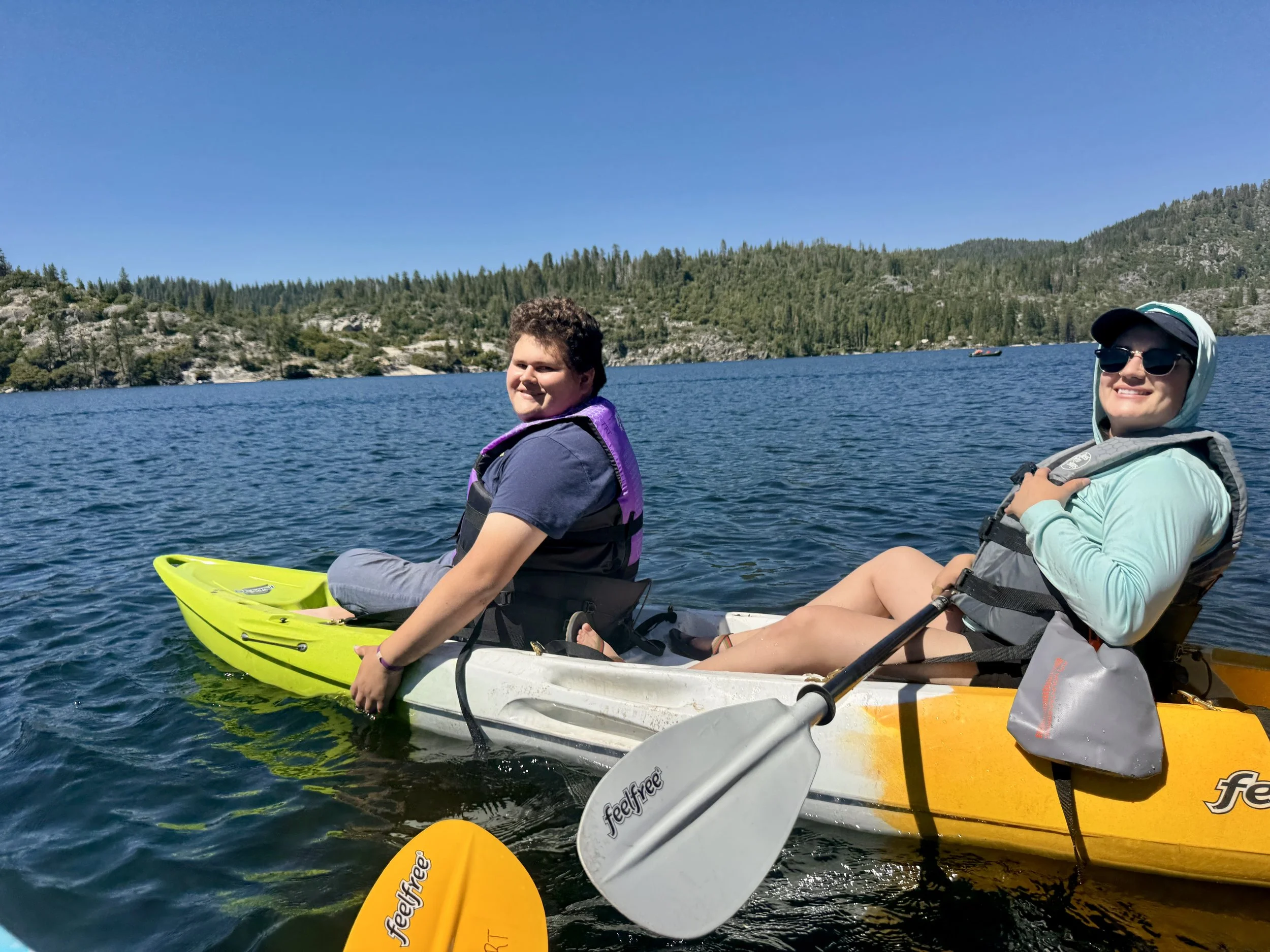
Then came the kayaks.
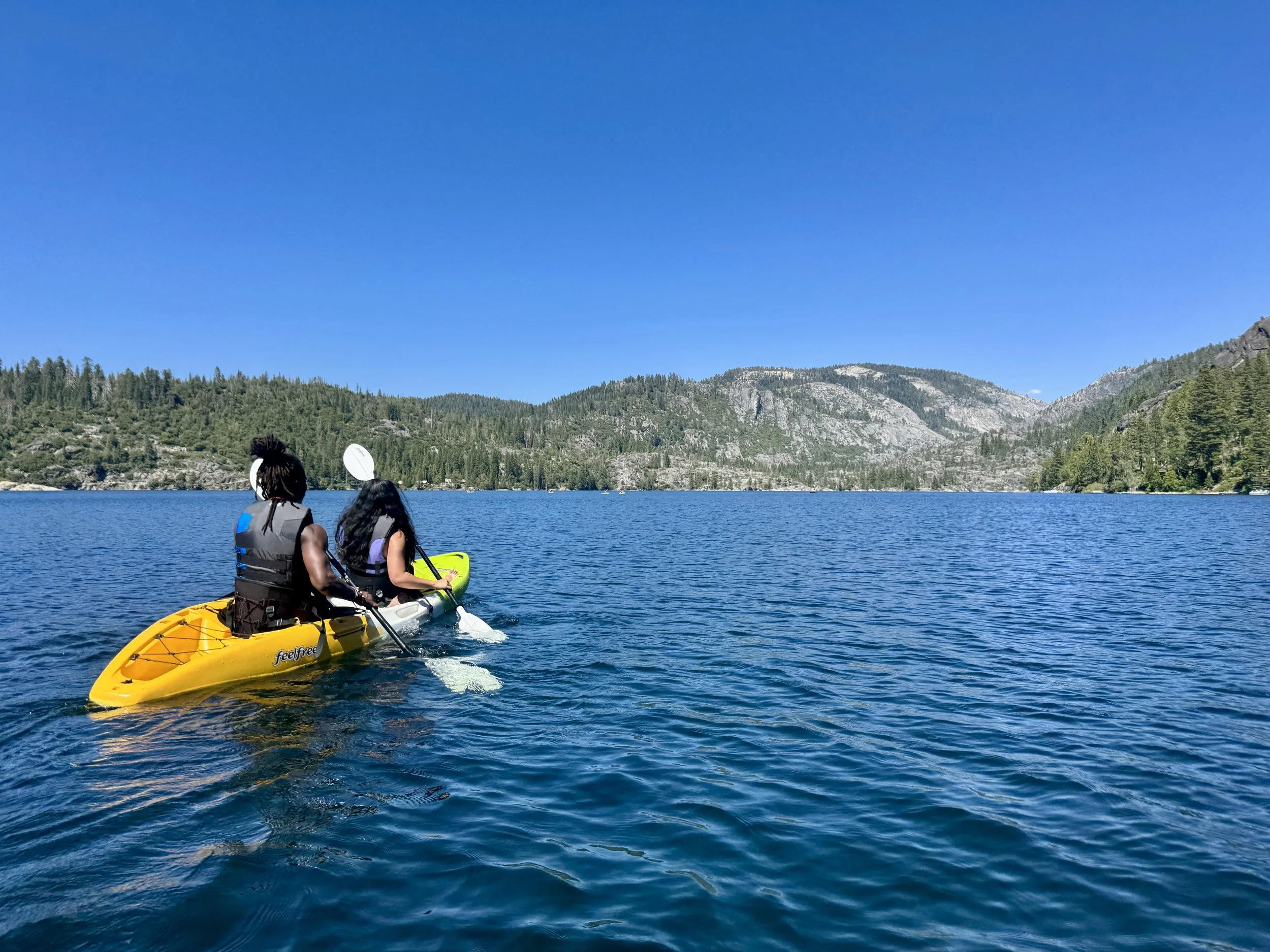
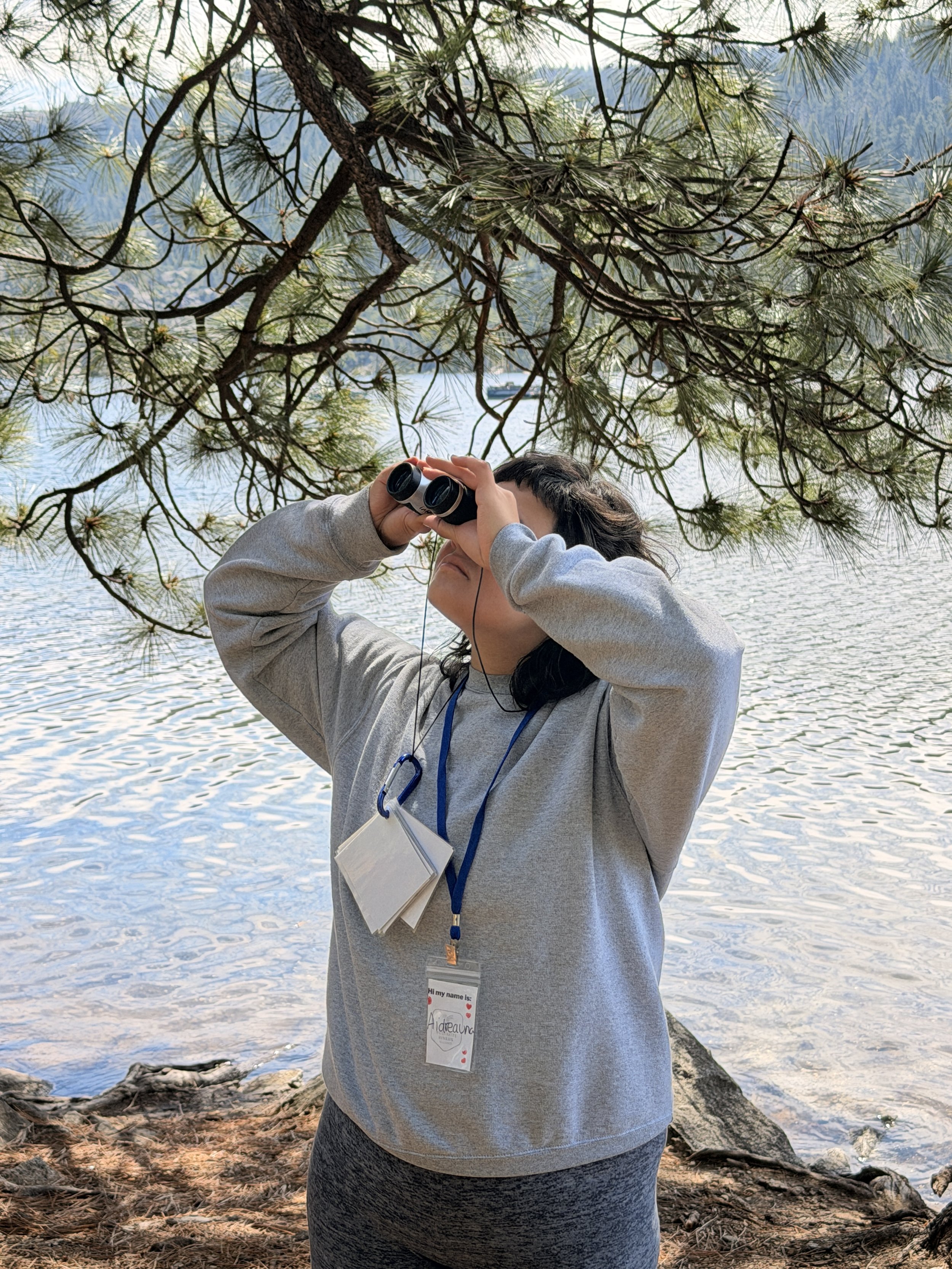
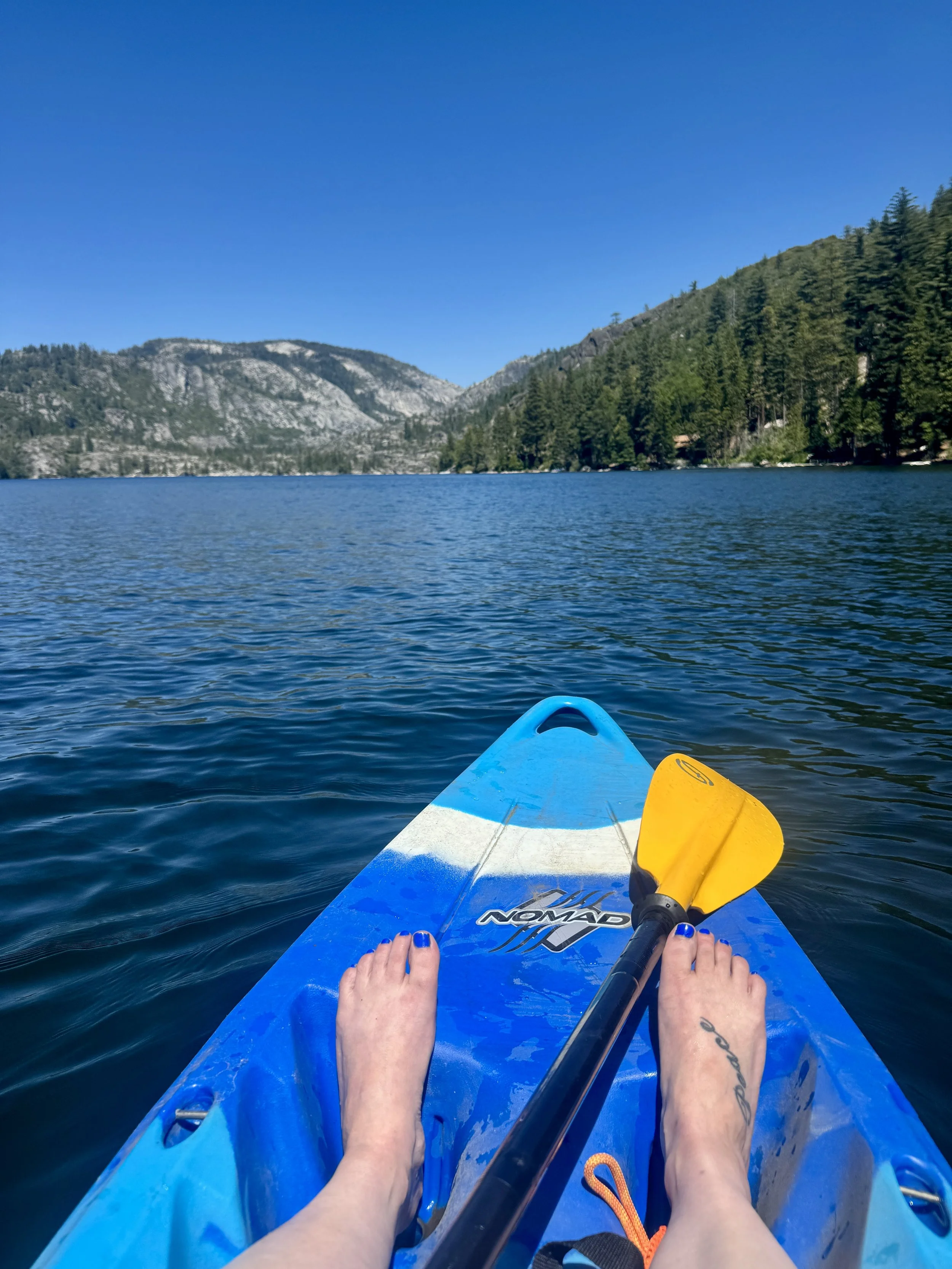
Many in the group were nervous about the water. But with encouragement, good equipment, and patient coaching, nearly everyone got out on the lake. For Christian, paddling a kayak on his own wasn't physically possible. As staff sorted out boats, two participants who had claimed a tandem kayak handed it over on the spot — they wanted him to experience the water too. Blanca, one of our staff, paddled Christian out onto the reservoir. Nearly everything that weekend was a first for him, from camping to using binoculars, and now he could add kayaking to the list.
Robert had said no to kayaking. Twice. But once he saw everyone on the water, he changed his mind — and soon he was cruising across the lake, laughing and smiling. "This is the best day ever," he said.
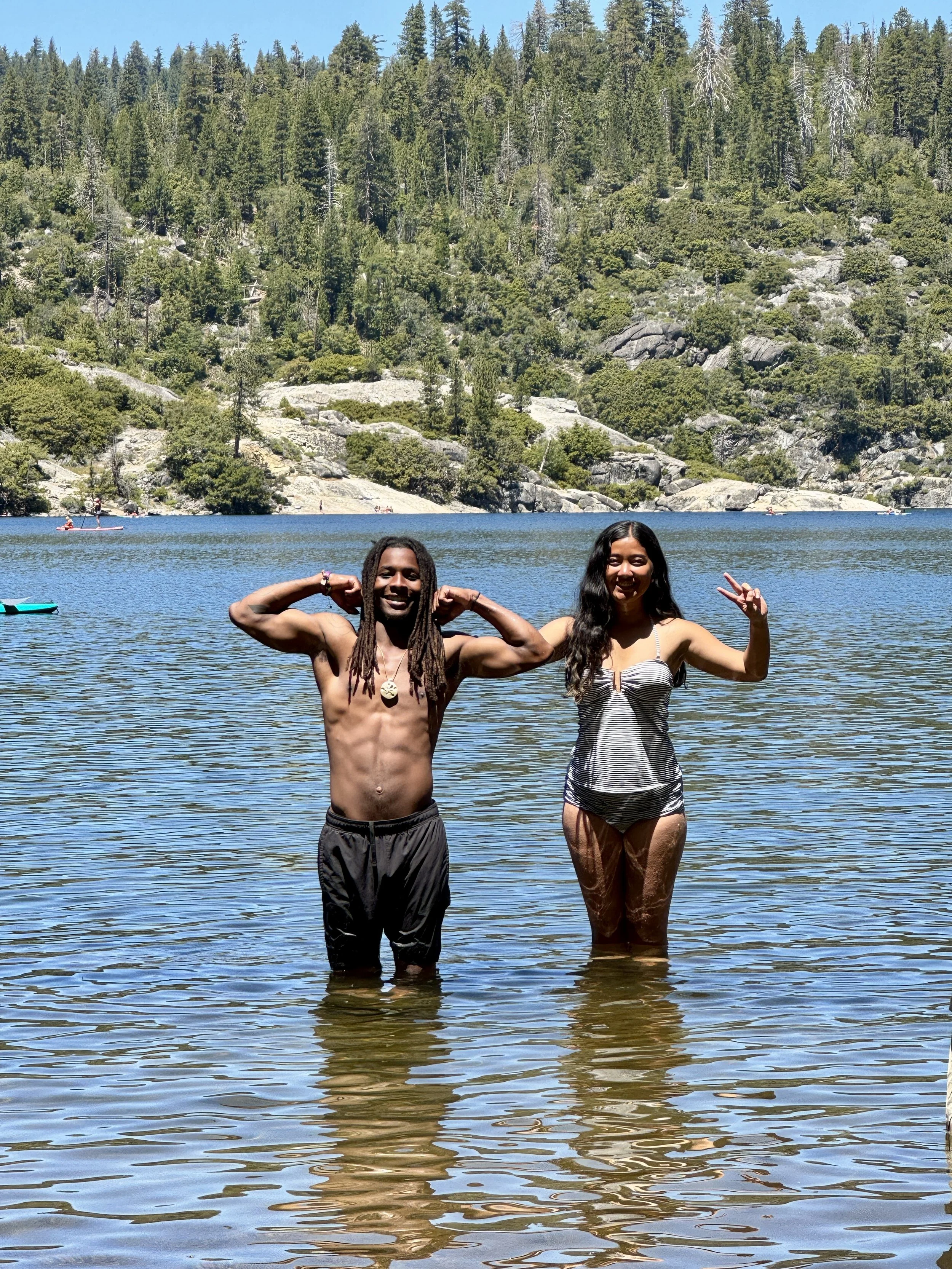
By afternoon, the group had claimed the public swim platform, running and jumping off it together like they were five years old again. Kyra, who started the day a little scared of the water, ended it swimming out to the platform on her own.
"You don't have to be blood to come together"
On the final morning, the group circled up to reflect. There were tears. There were hugs. And there was a theme that came up again and again: connection.
"I had the best time ever," shared Aidreana. "It goes to show that you don't have to be blood to come together as a community to have fun."
Participants asked how they could come back — with their friends, with their families. We sent everyone home with a post-trip resource guide for accessing camping and outdoor recreation on their own, because the goal was never a single trip. It's a lifelong relationship with the outdoors.
One participant summed up what they learned in a single line: "That I am able to reconnect with nature and gain new skills (find new parts out about myself)."
This is what access looks like
This is only the beginning for Explore Parks. Later this summer, we're bringing a second group to Pinecrest — this time, families from South Modesto, with kids in tow, kayaks in the water, and a menu built around the culturally relevant foods the moms have asked to cook themselves. We'll share that story soon, too.
None of this happens without support. Your gift helps us purchase gear, cover transportation, and hold space for more young people to have their own "there's more to life" moment on the water.
Your gift powers restoration — and it powers moments like this one. Join the Alliance and support Explore Parks.
With thanks to our partners at the Youth Navigation Center and Center for Human Services, and to the California Natural Resources Agency's Youth Community Access program for making this trip possible.
