
The day the water stayed at Cottonwood Creek
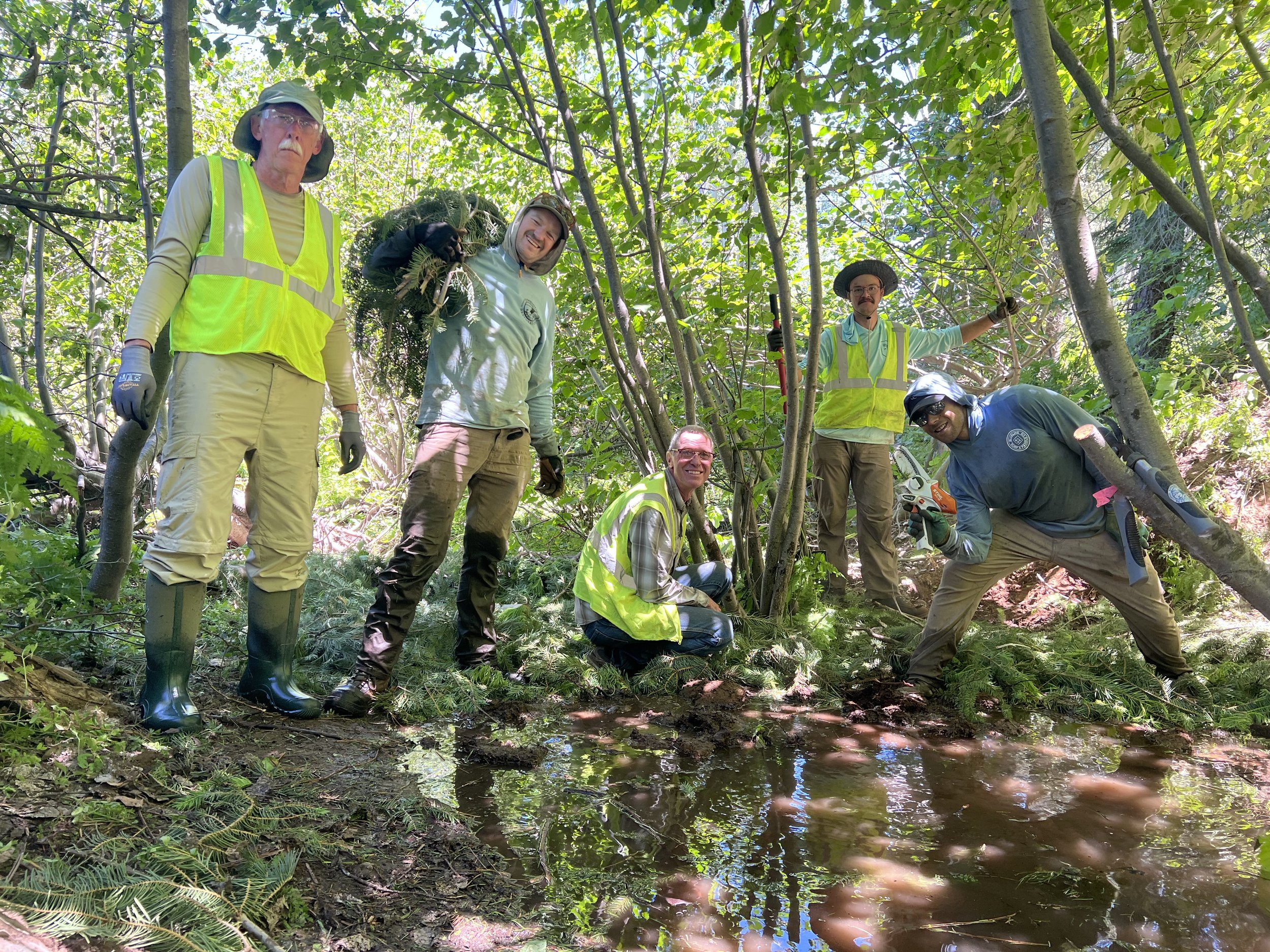
By late afternoon, volunteers were standing knee-deep in water.
That sentence wouldn't mean much on most creeks. On this stretch of Cottonwood Creek, it meant everything, because that morning the water in the same spot barely covered a boot: a thin, fast sheet racing through an eroded channel, wearing it deeper as it went. The crew had spent hours in the streambed, hauling logs and layering boughs into structures a beaver would recognize. Within hours of finishing the structures, water began pooling behind them and spreading back across the channel.
When a creek cuts too deep
Cottonwood Creek runs through the Stanislaus National Forest, and it's been through a lot. The trouble started with roads. Culverts at either end of the meadow were set too low, and when water pours fast out of a pipe with nothing to slow it down, it digs. The creek began eroding toward the level of the culverts, cutting itself into a gully. Decades of cattle grazing wore down the banks, and then the 2013 Rim Fire tore through the surrounding country and made a damaged creek worse. Water that should have spread across the meadow and soaked in was rushing downstream instead, cutting the channel deeper as it went.
A healthy meadow works like a sponge: snowmelt soaks in through spring and seeps back out slowly all summer, keeping the meadow green and the creek running long after the surrounding country has dried out. When a creek cuts down into a trench, the sponge drains, and every year of fast water digs the trench a little deeper.
Here's the encouraging part. This is fixable, and the fix doesn't require heavy machinery. It requires people willing to spend days in the mud, doing the kind of work beavers once did all across the Sierra.
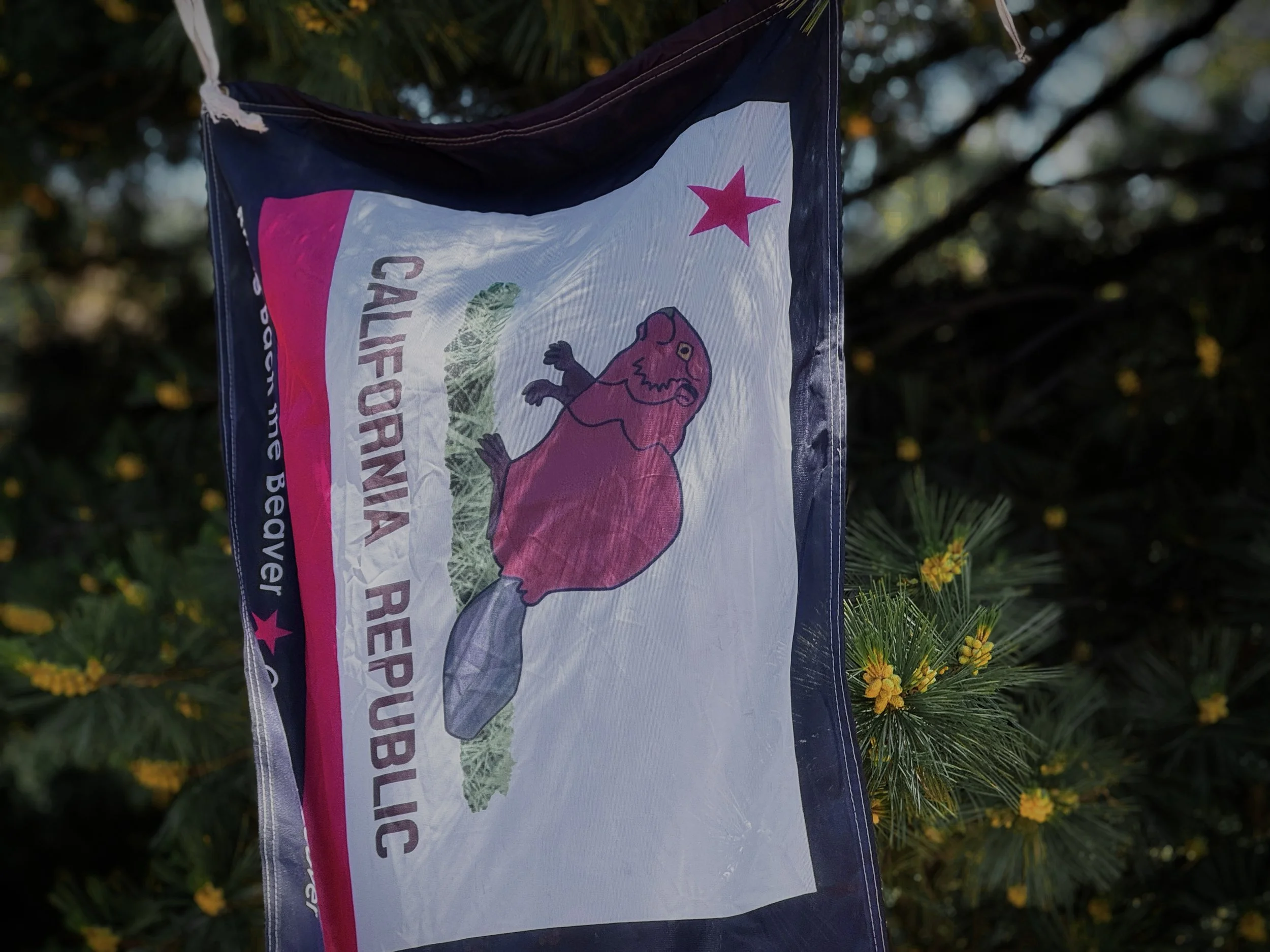
Joining the beaver union
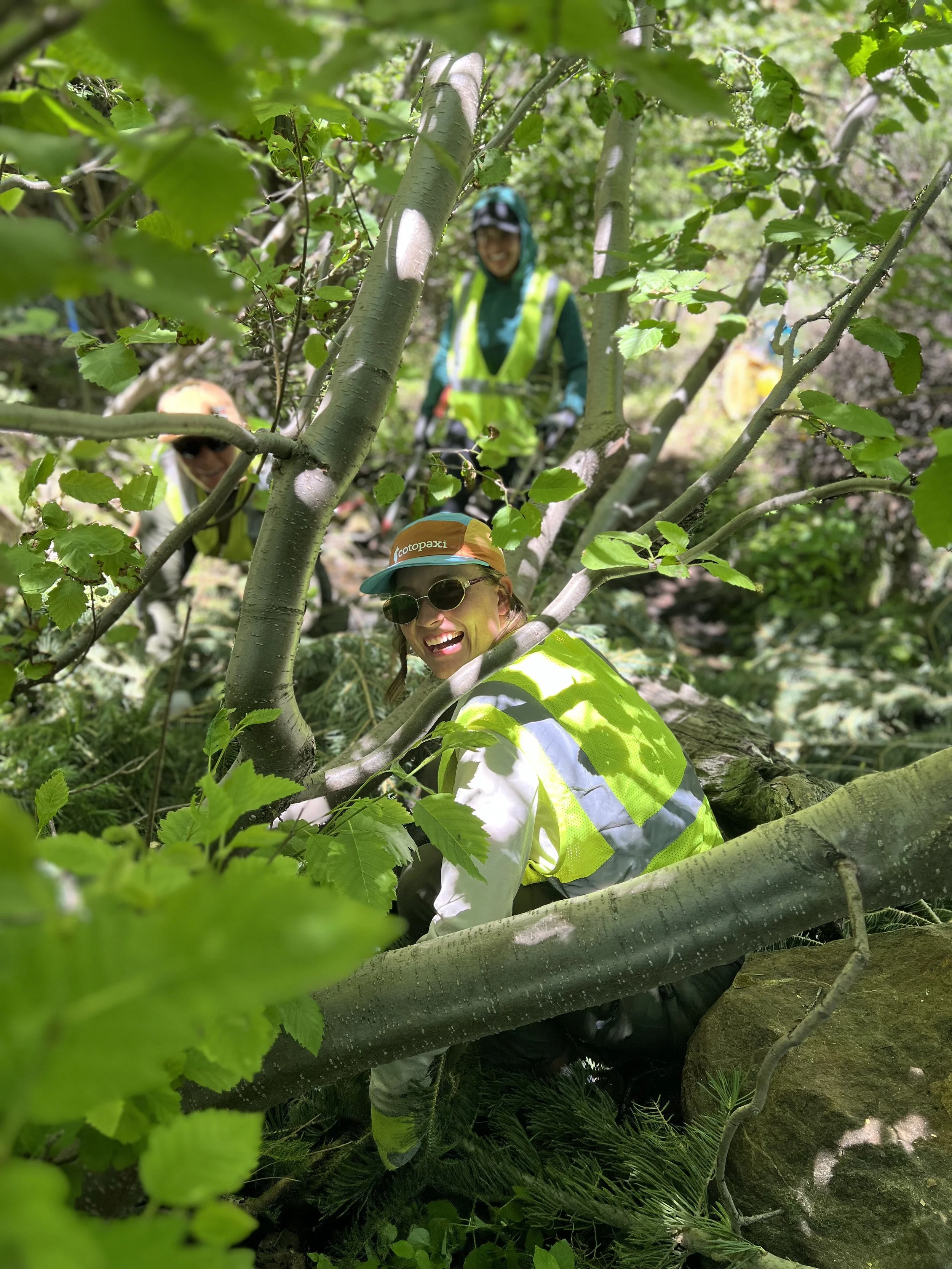
Over two weeks this summer, our crew teamed up with Symbiotic Restoration, Plumas Corp, and a hardworking group of volunteers at Cottonwood. Together we hauled logs, moved rocks, planted willows, and built more than twenty beaver dam analogs and post-assisted log structures by hand, using natural materials gathered on site.
A beaver dam analog is what it sounds like: a structure that does a beaver dam's job, built from what the land provides. The crew layered green boughs with logs, stuffed each layer tight with vegetation, sealed it with a cap of sod, and repeated until the structure stood. Water backs up behind it, slows, and spreads sideways instead of scouring downward. Sediment settles. The floodplain reconnects, and the water table starts to rise. Posts driven in at the end anchor each structure against high flows, and they'll snag branches and debris the creek carries down later, so nature can take over the building from here.
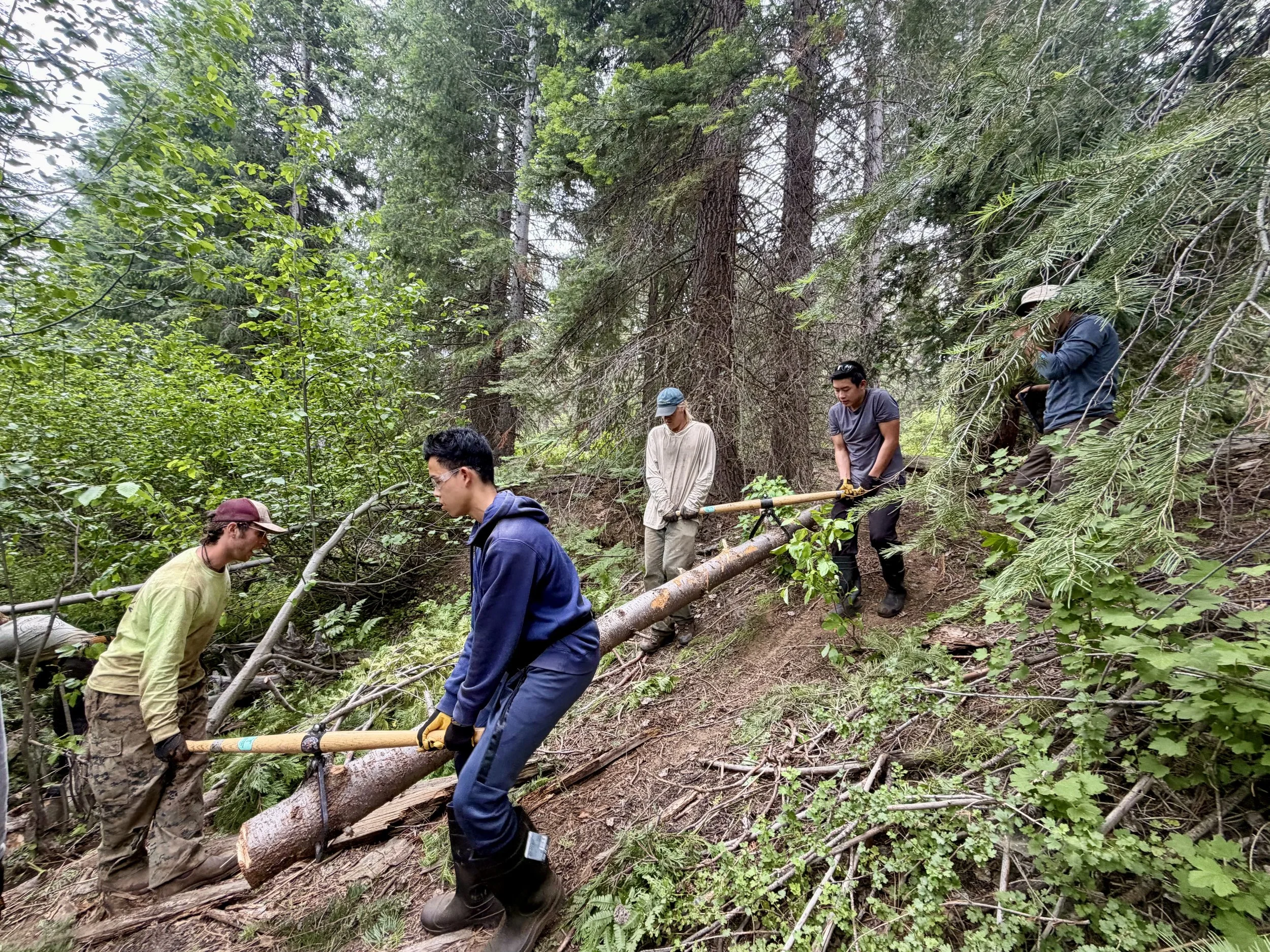
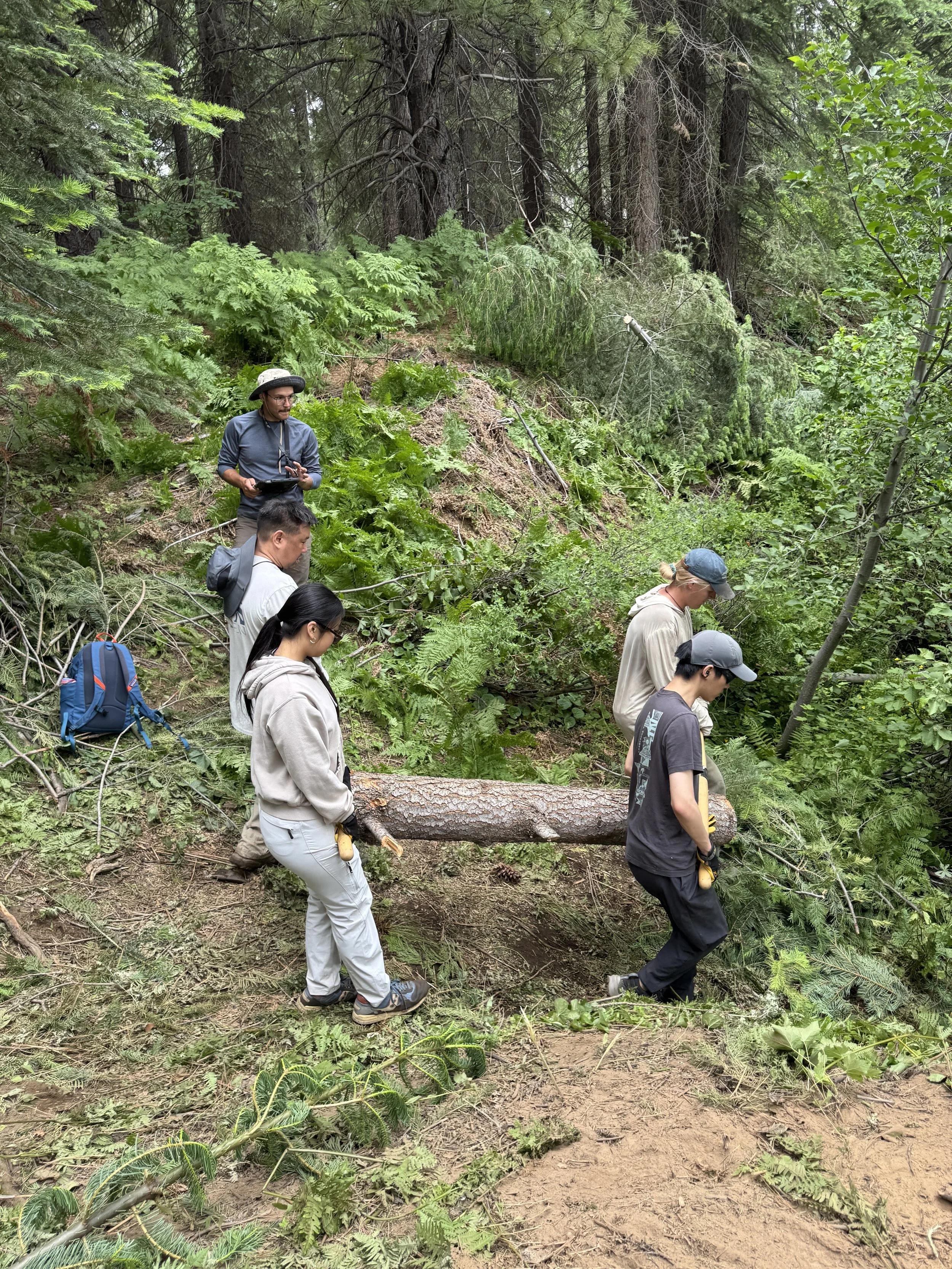
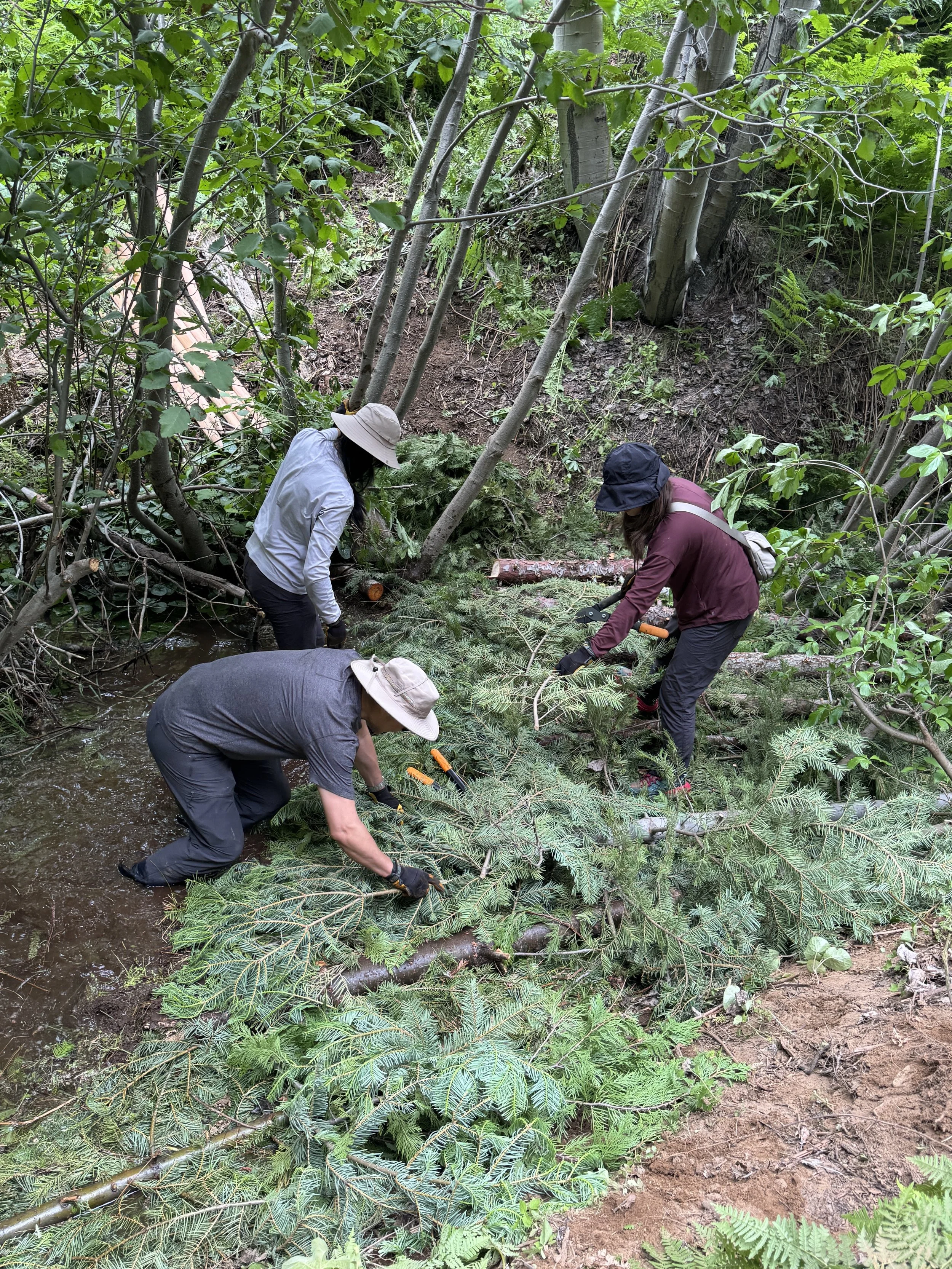
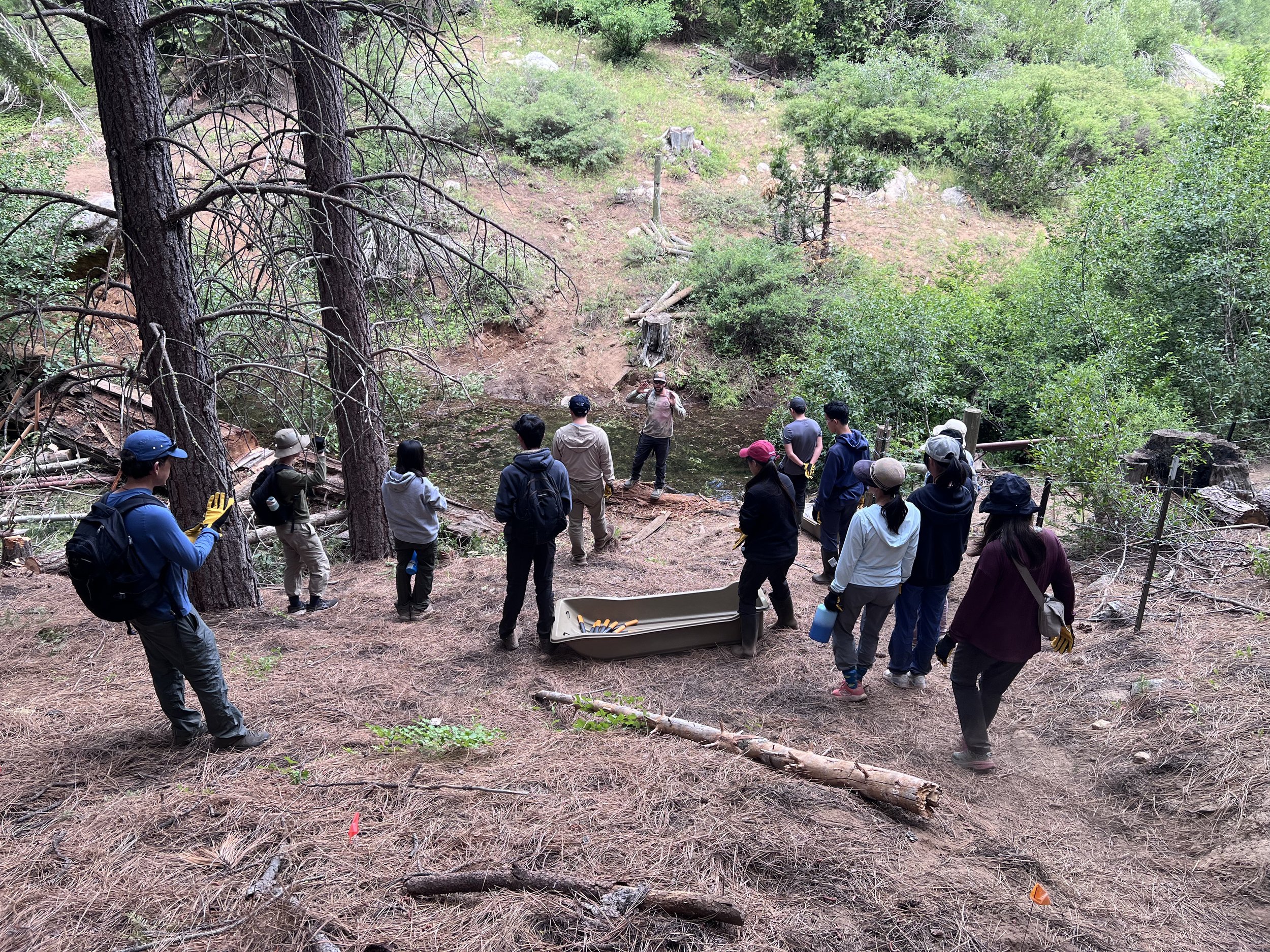
Orange flagging marked each site along the bank. Everything after that came down to hands and hand tools. Volunteers worked in pairs with log tongs, walking downed conifers down the slope toward the water. Others dragged logs along the creek on sleds, then hauled shovelfuls of dirt back to pack the structures in. Boughs came down by the armload for layering and stuffing into the structure.
By the end of a volunteer day, everyone was muddy, tired, laughing, and celebrating small victories. One volunteer, after hours of moving logs, put it best: "I came here to help the forest and somehow ended up joining the beaver union."
Another told us: "I came out to volunteer for a day. Now I'm emotionally invested in this creek."
"There's something special about sculpting the land by hand, with simple tools and watching a dramatic change occur right before your eyes," said Weston Stulac, Yosemite Rivers Alliance's restoration coordinator.
The crews who taught our crew
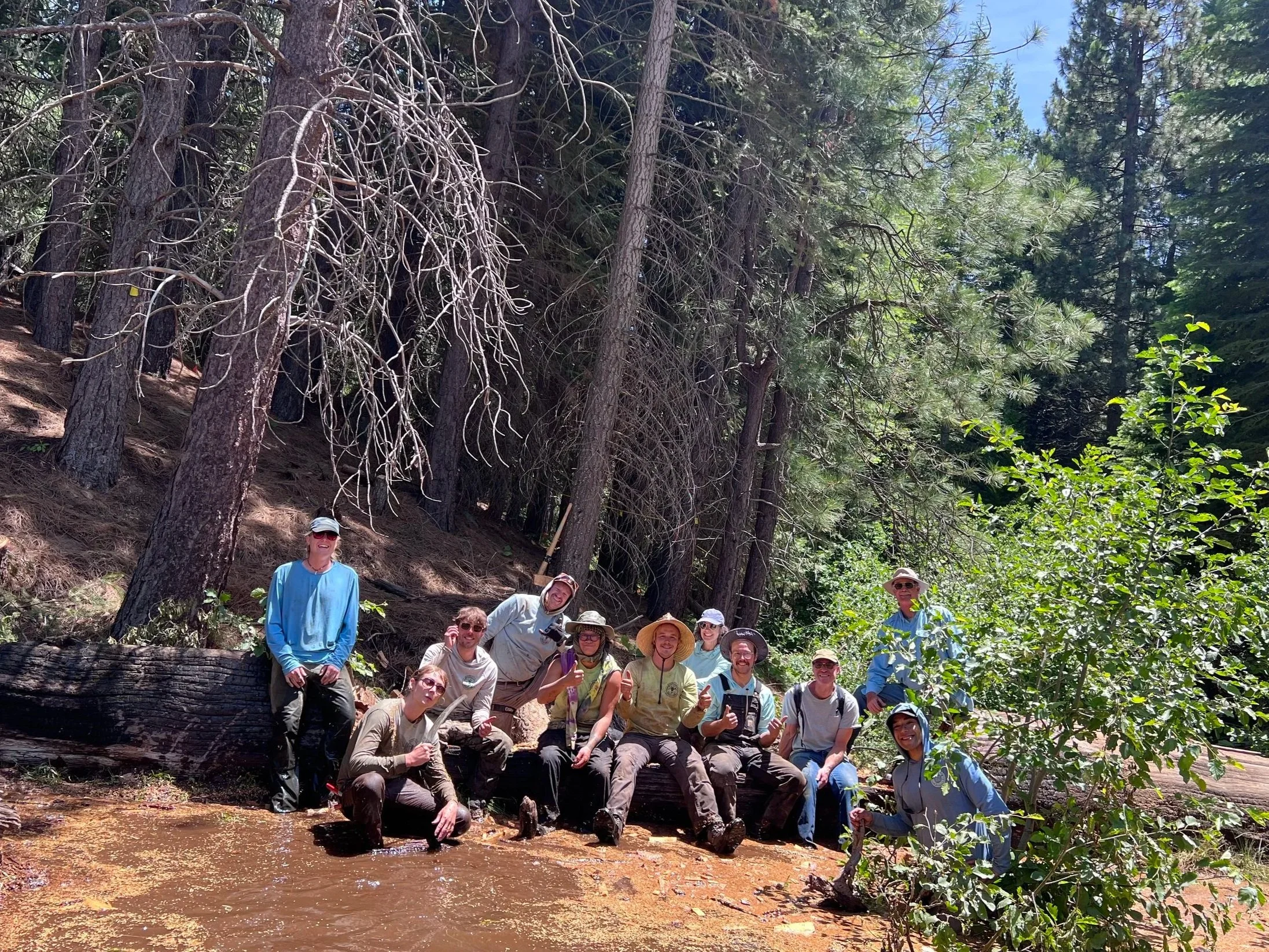
Symbiotic Restoration and Plumas Corp guided the design and construction of every structure. Between them, they've installed hundreds of these structures across California, and it shows in the small decisions: how deep to set a post in different ground, how tight to stuff, where a structure will hold and where it will blow out in the first big flow. Those calls take years to learn, and you learn them standing in a creek beside someone who's already made them a thousand times.
That's why this project was about more than the structures. Our field crew worked beside theirs for days, and their crews helped lead our volunteers as well.
"Our team has been building our internal capacity to plan and build process-based restoration structures for years. We got to work for a full two weeks with Symbiotic, learning invaluable lessons and new ways of building beaver dam analogs. This knowledge will carry on with our team for decades," Weston added.
What a wet meadow does for everything around it
Meadows cover a small fraction of the Sierra Nevada, and they hold far more life than that fraction suggests. Water is the reason.
A meadow that's still wet in July is one of the few green places left on a summer landscape. Frogs breed in the shallows. Birds nest in the willows along the edges, including the ones volunteers planted this month, which will one day feed and anchor the whole streambank. Insects hatch by the thousands and feed everything from swallows to trout. Deer and bear come through for the forage.
The water leaving a meadow matters as much as the water sitting in it. Ground that soaks up snowmelt in spring lets it go gradually through the dry months, so the creek keeps running later into the season and stays colder while it does. A meadow also cleans what moves through it, catching sediment in its plants and soil instead of sending it downstream to settle over the gravel where fish spawn.
Then there's fire, and this landscape knows fire. The Rim Fire is part of why Cottonwood Creek needed help in the first place. A wet meadow stays green while the forest around it cures and turns brittle. That slows a fire down, gives crews safer ground to work from, and gives wildlife somewhere to go when the country burns. Restoring this creek is part of how the land gets ready for the next one.
Restore enough creeks like this across a watershed and the whole system starts holding water the way it used to. That's the long game at Cottonwood.
The water is already slowing down
The structures are the starting point. The real transformation continues from here, as the creek slows down, stores more water, and rebuilds its connection to the floodplain year over year.
And we'll be back. Next spring or summer, our crew returns to build these structures up: adding material, increasing their complexity, and responding to whatever the creek decides to do over the wet season. The crews who do this work like to describe it as having a conversation with the creek. You feed it material, it does something, you respond.
But day one told us plenty: a thin, fast trickle in an eroded channel in the morning, and volunteers standing knee-deep in a pool by late afternoon. When you work with natural processes instead of against them, the landscape can start answering almost immediately.
Thank you
To the staff of the Stanislaus National Forest: thank you for being so generous with your limited time. The biological, botanical, and aquatic surveys of the meadow, the guidance on range management and the hands-on work beside us all made this possible. Restoration on public lands does not happen without you.
To Symbiotic Restoration and Plumas Corp: thank you for the structures, and thank you for the teaching. You made our team better at their work, and your lessons will outlast every post you helped us drive.
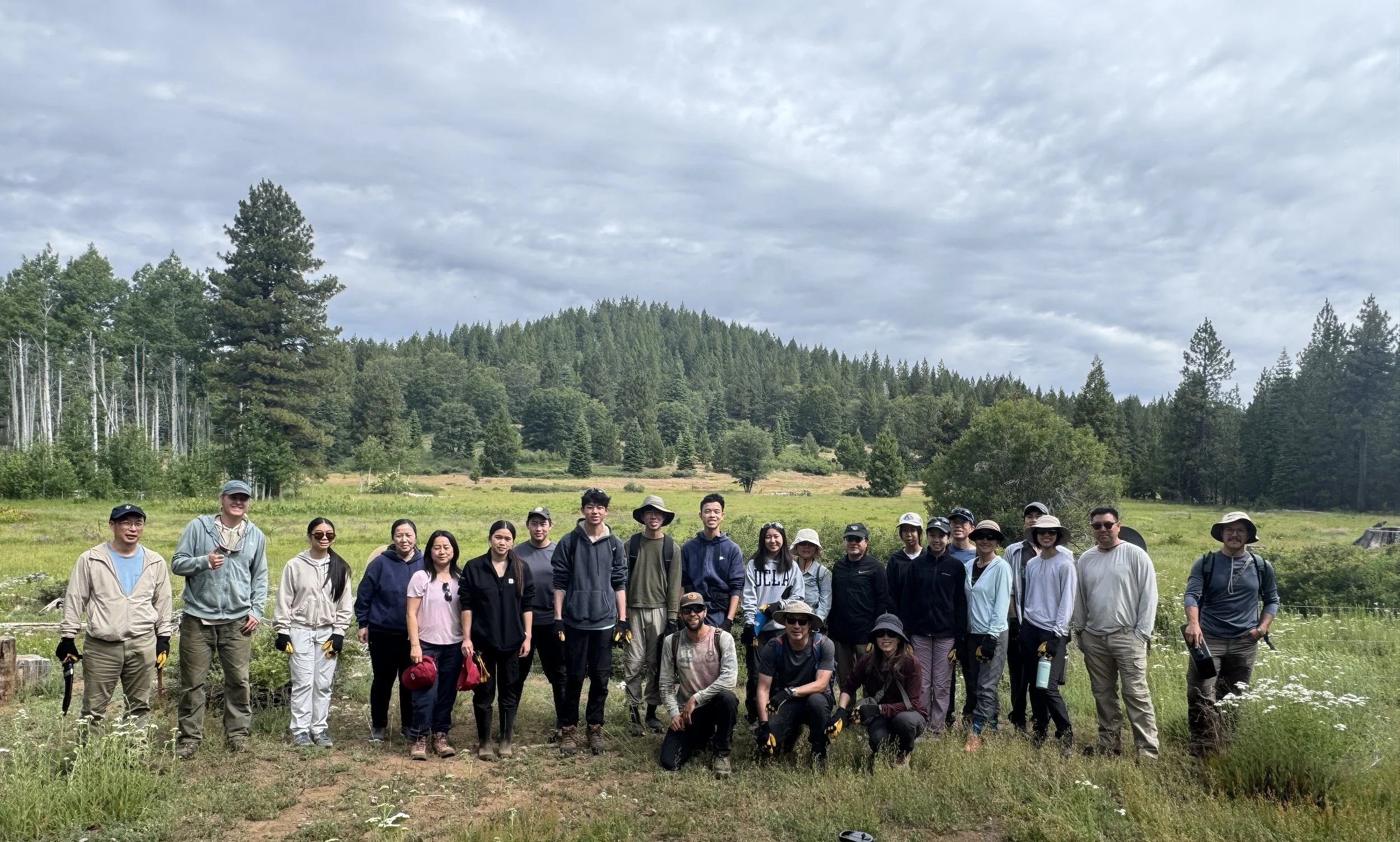
To the volunteers who showed up, got muddy, and joined the beaver union: this creek is different because you were in it. Some of you are still emotionally invested. So are we.
This project was made possible through funding and partnership from the National Fish and Wildlife Foundation, the California Department of Fish and Wildlife, the National Forest Foundation, and the Office of Spill Prevention and Response, and by donors who back restoration before there's anything to point at.
Roll up your sleeves with us at our next restoration workday — sign up here — or help fund the next stretch of creek at yosemiterivers.org/donate
