
Good Fire at Work: How Strategic Forest Treatments Made the Cedar Ridge Burn Possible
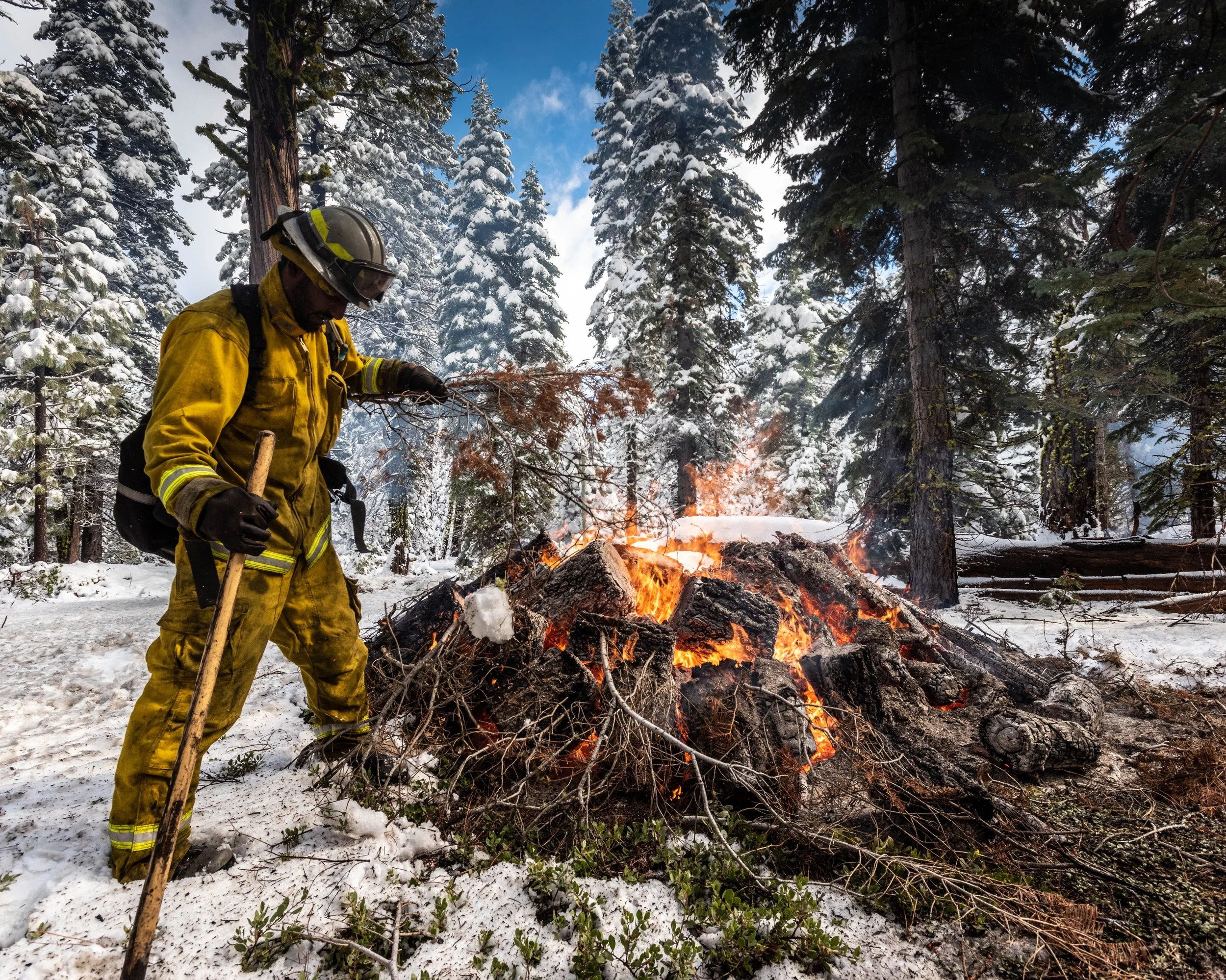
Courtesy photo / California State Parks
This month, firefighters on the Stanislaus National Forest began a planned broadcast burn in the Cedar Ridge area - which is the ridgeline between the Tuolumne and Stanislaus Watersheds near Twain Harte. This is a carefully coordinated operation that plays an important role in restoring forest health and reducing wildfire risk in the Greater Yosemite Region..
While prescribed fire may look dramatic from the outside, this burn is the result of years of planning, partnership, and on-the-ground restoration work. It’s also a powerful example of how proactive forest stewardship makes it possible to safely reintroduce good fire back into the landscape.
Preparing the Forest Before the Flame
The Cedar Ridge burn area overlaps with lands treated between 2021 and 2023 as part of the Cedar Ridge Fuels Reduction Project, a multi-year effort designed to reduce hazardous fuels and improve overall forest resilience.
That project was implemented under a partnership with Tuolumne County, the Stanislaus National Forest, and the Yosemite Stanislaus Solutions collaborative. At the time, Yosemite Rivers Alliance (then operating as Tuolumne River Trust) provided project management support — helping move complex restoration work from planning to reality.
For our team, this work has always been about thinking several steps ahead.
“A prescribed burn is more than just lighting a fire – it’s the culmination of lots of careful planning and preparation,” said Jackson Brooke, Forest Health Project Manager at Yosemite Rivers Alliance.
“Fire is inevitable on this landscape, so the treatments we helped implement at Cedar Ridge were designed to moderate fire behavior, making it safer for personnel and more beneficial to the forest. Prescribed fire was always the desired follow up to these treatments, so seeing good fire be put on the ground here is incredibly rewarding.”
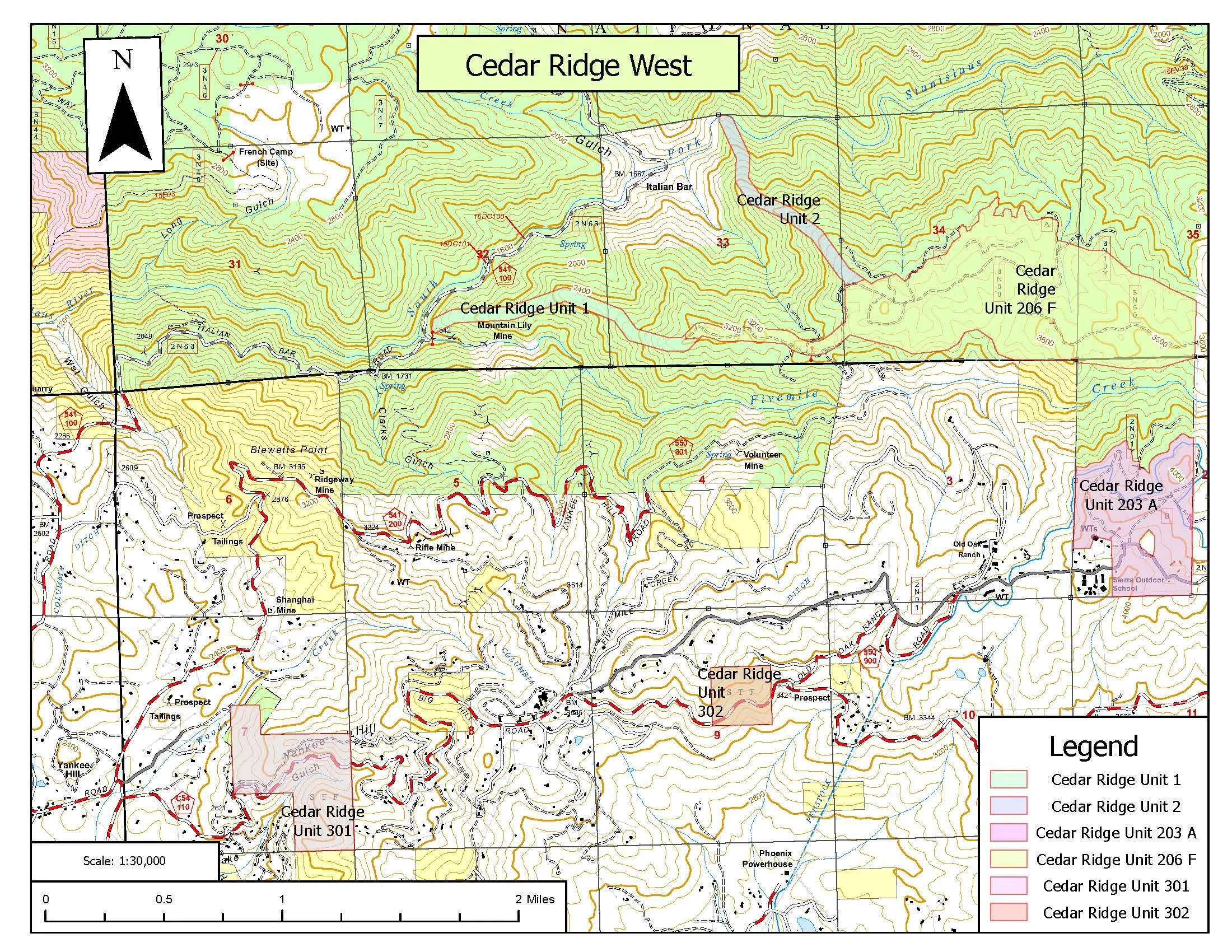
Cedar Ridge West treatment sites map.
Why These Treatments Matter
The Cedar Ridge Fuels Reduction Project focused on removing ladder fuels — small trees and dense vegetation that allow fire to climb from the forest floor into the canopy. By breaking this vertical continuity, restoration crews helped shift future fire behavior from dangerous crown fire toward lower-intensity fire that forests evolved with.
Because of this earlier work, firefighters conducting the Cedar Ridge broadcast burn are now able to:
Safely consume accumulated surface fuels
Moderate fire behavior and flame lengths
Limit undesirable tree mortality
Protect larger, fire-resilient trees
Create safer working conditions for fire personnel
“When we talk about forest health, we’re really talking about restoring ecosystem function and the ability for natural processes, such as fire, to play the role in shaping the landscape that they did for millennia,” Jackson added.
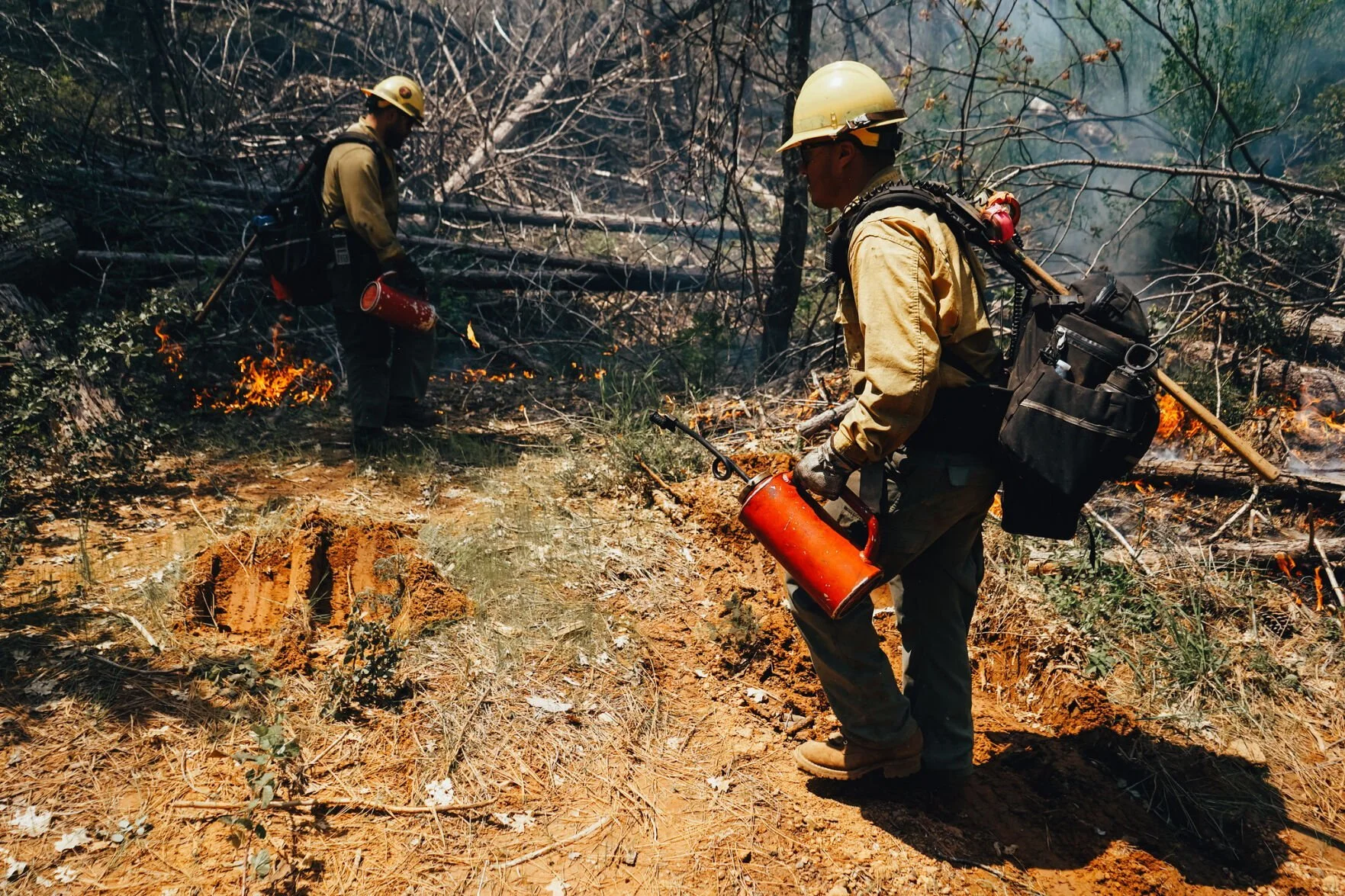
U.S. Forest Service firefighters conduct prescribed fire operations in the China Ridge area in May 2023. Courtesy photo / Benjamin Cossel / U.S. Forest Service
From Fire Suppression to Forest Resilience
For over a century, widespread fire suppression disrupted natural fire cycles across California’s forests. In addition, previous logging practices removed the largest, most fire resistant trees. The result has been overcrowded stands of small, densely-packed, stressed trees, and dangerous fuel buildups that contribute to today’s extreme wildfire behavior.
Instead, we are promoting a forest that has fewer trees overall, and a diverse distribution of tree sizes, ages, and species including individual trees well-spaced, some clumps of trees, and open patches with no trees,, so that there is diversity and heterogeneity in forest structure. This forest structure can withstand more frequent and lower intensity wildfires while supporting diverse wildlife that rely on the Sierra’s mixed-conifer forests.
Projects like Cedar Ridge represent a shift toward intentional, science-based land management — combining fuels reduction, prescribed fire, and long-term collaboration across agencies and communities.
Across the broader SERAL and SERAL 2.0 landscapes, Yosemite Rivers Alliance continues to support this kind of work because healthy forests are inseparable from healthy rivers. Forest structure affects snowpack retention, runoff timing, water quality, and the resilience of entire watersheds downstream.
A Model for What’s Possible
The Cedar Ridge prescribed burn is not just a single operation — it’s the visible outcome of sustained partnership, trust, and preparation.
It shows what’s possible when agencies, counties, and local organizations work together to restore balance to fire-adapted ecosystems. And it reminds us that good fire, applied under the right conditions, is one of the most powerful tools we have to protect both people and the landscapes we love.
“The land requires active stewardship,” Jackson said. “ Success is bigger than one project or one burn; it’s consistently working towards a landscape where agencies and landowners are safely and regularly putting good fire on the ground, maintaining healthy ecosystems and protecting communities.”
We’re proud to have played a role in laying the groundwork for this burn — and to continue advancing forest and watershed resilience across the Greater Yosemite Region for years to come.
