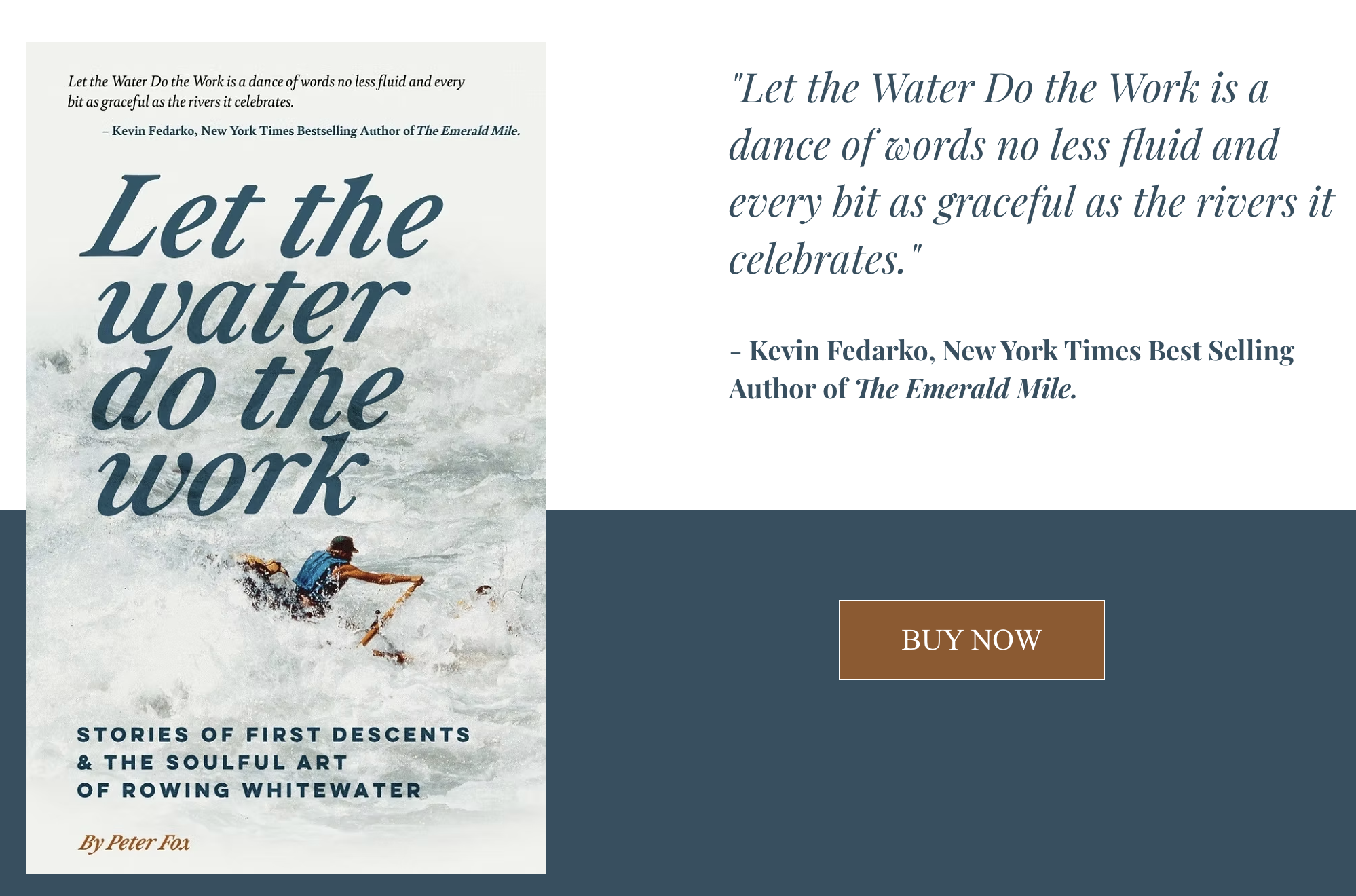
Let the Water Do the Work: Peter Fox on Rivers, Learning, and a Life Well Run
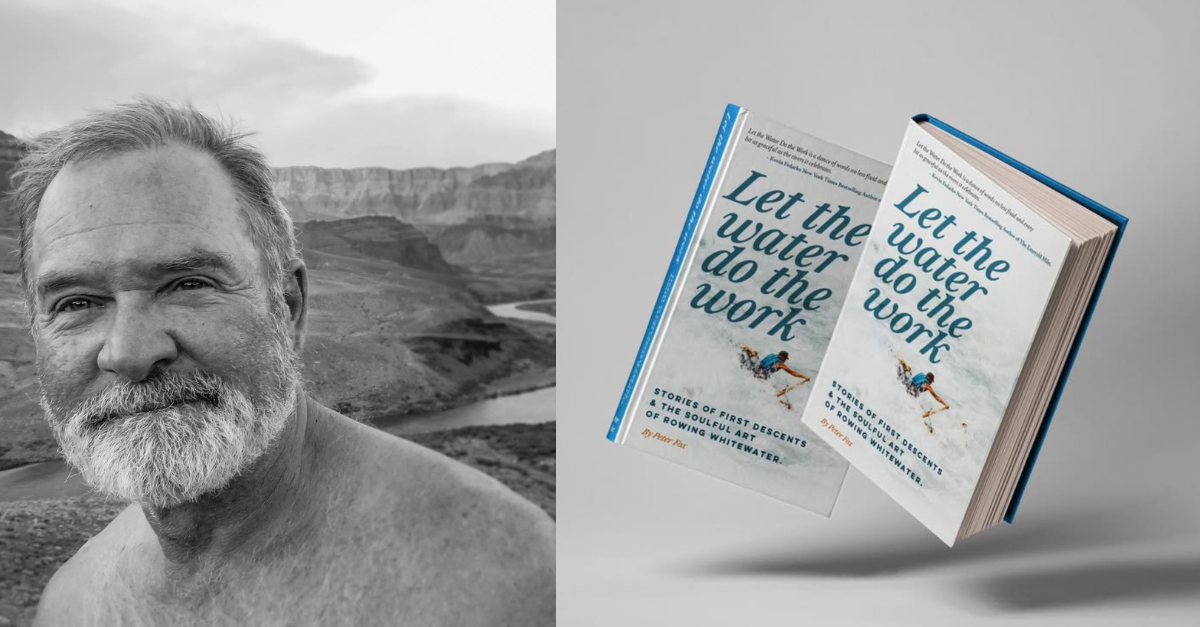
For Peter Fox, rivers are not just places you visit. They are places that shape you.
“The rivers have given me, more than anything else, a direct connection with nature,” Peter says. “To really have a relationship with a river, it requires close attention. It wakes up a part of your human self that has largely disappeared for most of us living our modern lives.”
That sense of attention, humility, and relationship is at the heart of Let the Water Do the Work, Peter’s newly published book. Drawing from more than four decades of river running, teaching, and learning, the book weaves together personal stories, river history, and hard-earned lessons about how people learn, how rivers teach, and what it means to find your place in the natural world.
Finding His Way to Rivers
Peter did not grow up on rivers. In his twenties, he was working odd jobs and trying to figure out how to make his life make sense. A chance encounter changed everything.
“A guy I was working for handed me an application and said, ‘Fill this out.’ I asked what it was, and he said, ‘It’s an application to be a river guide.’ I told him I didn’t want to be a river guide, and he looked me in the eye and said, ‘Just fill it out.’”
Peter did. The first time he put his hands on a pair of oars, something clicked.
“I fell head over heels in love,” he says. “I knew in a flash this was going to be the perfect thing for me.”
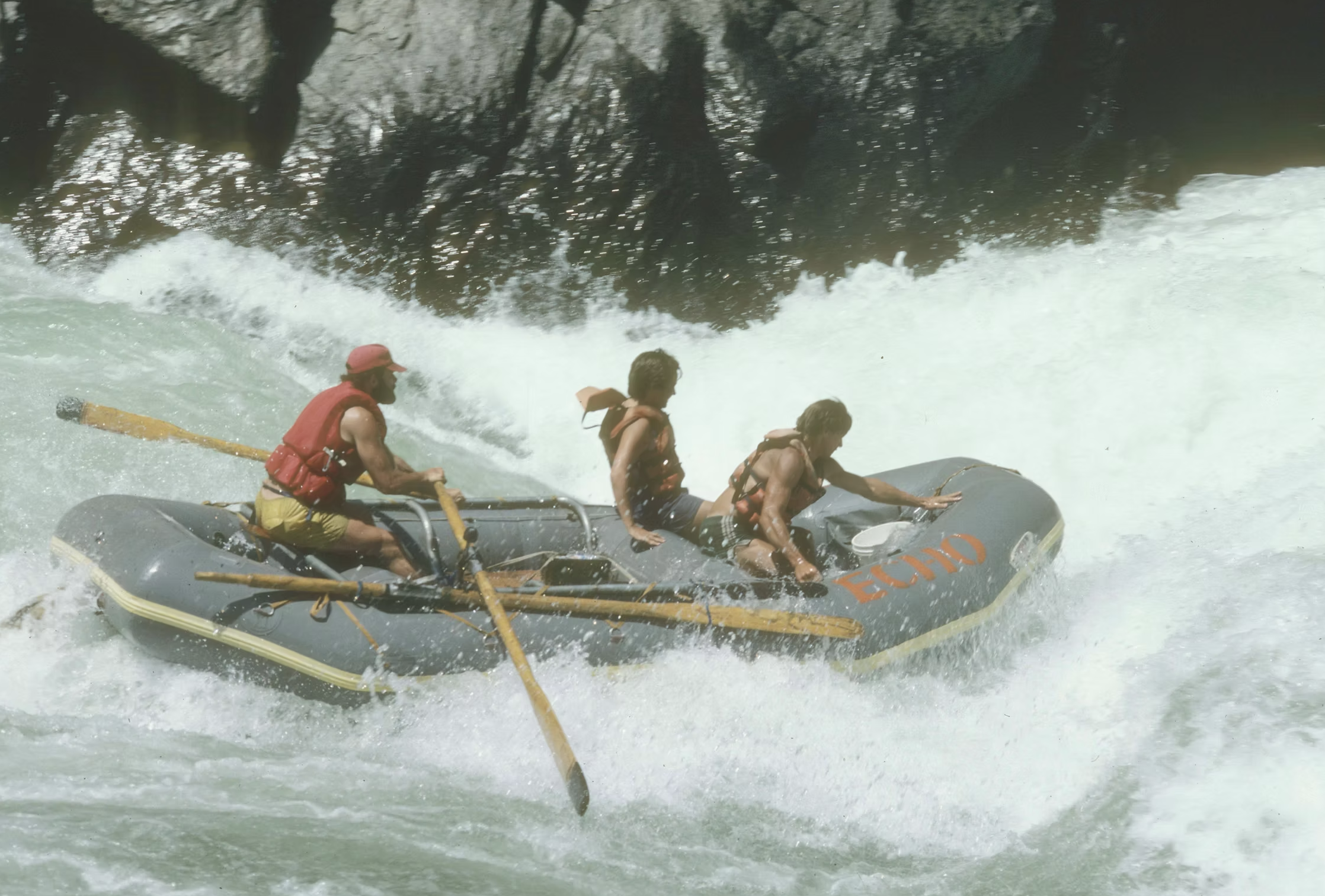
He started as a complete beginner in 1980, learning on rivers like the South Fork of the American and the Stanislaus. Not long after, he found himself on the Tuolumne River, a place that would become central to his life and his book.
“The Tuolumne was probably the biggest teacher in my river running life,” Peter says. “It was my river heartland.”
Letting the Water Teach
The Tuolumne, Peter explains, is a deeply technical river carved through granite over millennia. Its rapids follow channels etched into bedrock, making it a place where skill comes not from force, but from awareness.
“It’s a perfect river to learn to let the water do the work,” he says. “You can put yourself into the water, and the water knows exactly how to take you through the rapids.”
The phrase that became the book’s title came from another teacher. Peter credits pioneering rower Becca Lawton, who showed him that strength alone was not the point.
“She had to learn how to run rivers without overpowering them,” he explains. “She used her knowledge of the water and her ability to pay attention.”
One of Peter’s most formative moments came watching another guide, Sylvia Hopewater, run a Tuolumne rapid.
“I had just pulled hard on the oars and felt big and strong,” he says. “Then I watched Sylvia come through the same rapid and hardly pull on the oars at all. She just rode the water through. A light bulb went off in my head, and I realized I’d been doing it all wrong.”
From that moment on, Peter changed how he rowed.
“I began to learn how to let the water do as much of the work as I possibly could,” he says. “That lesson has stayed with me for the last forty-five years.”
Choosing the Right River
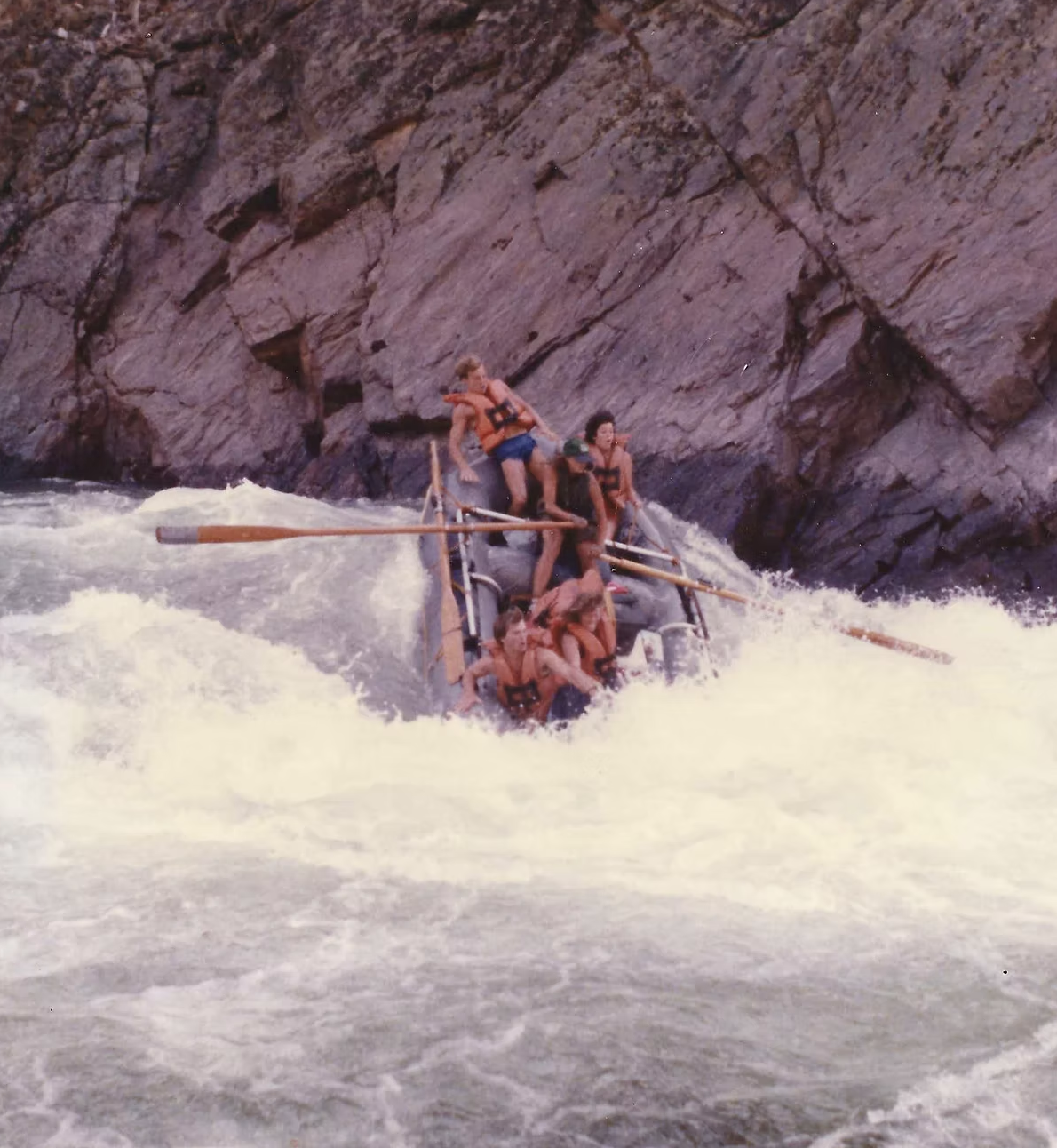
Peter’s life on rivers includes moments of exhilaration and moments of humility. One of the most pivotal days of his career came in 1982, when he and a small group of guides ran the Tuolumne at 13,500 cubic feet per second, far higher than anyone had been allowed to run it before.
“At the end of that day, I never felt so alive in my life,” he recalls. “Everything around me looked beautiful. The river pulled me fully into present-time awareness.”
That single run led to international guiding work and shaped the trajectory of his career. But later in life, rivers taught him a different lesson.
“When I went back to a very difficult river in my sixties, a little out of shape and injured, I learned a great deal of humility,” Peter says. “The most important lesson is learning to choose the river that’s right for you. It’s not one size fits all.”
That lesson, he emphasizes, applies far beyond rivers.
“Learn to listen to yourself and be true to yourself,” he says. “Challenge yourself, but in ways that help you learn who you are.”
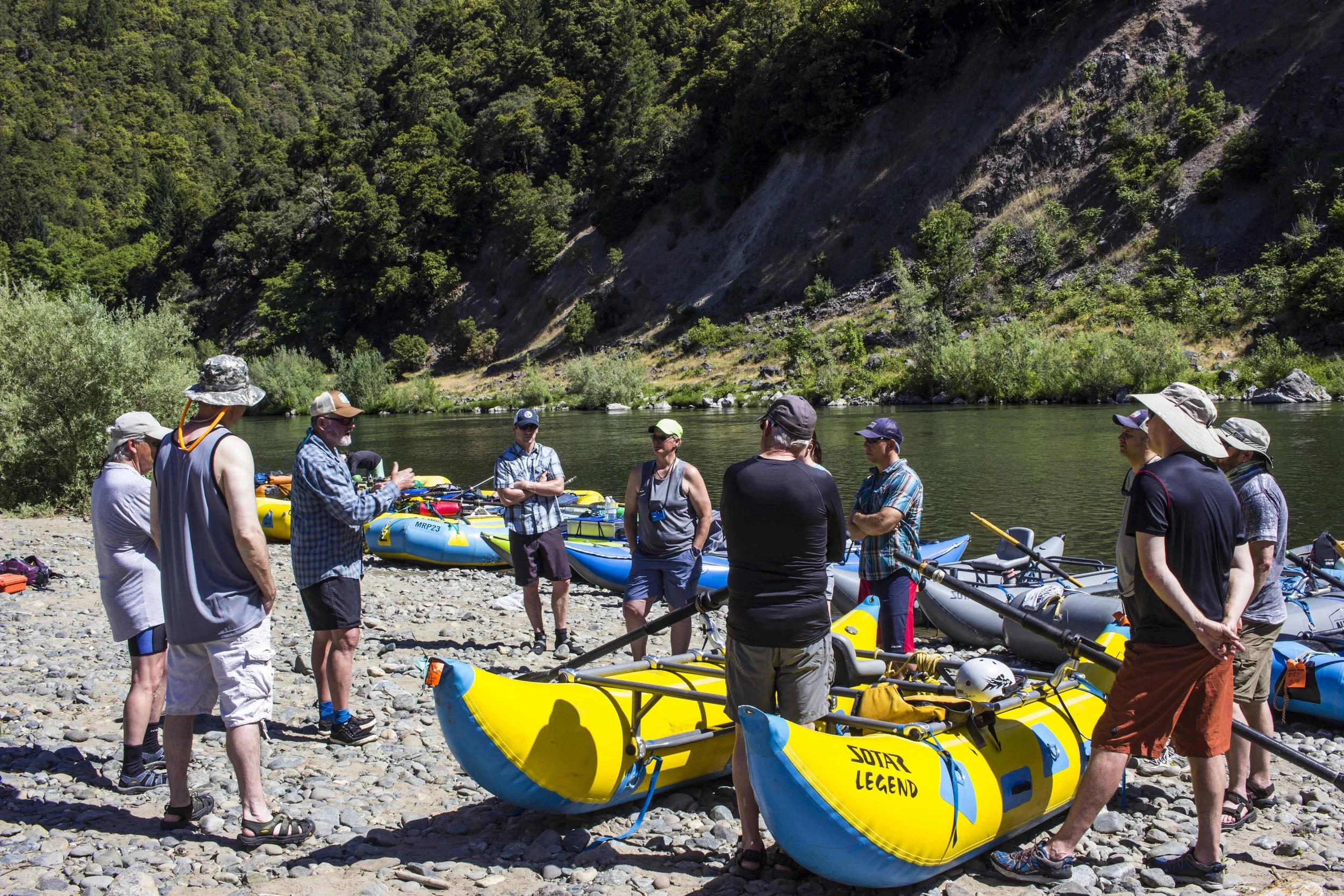
Why This Book, and Why Now
Let the Water Do the Work grew out of Peter’s return to teaching. After years of guiding and adventuring, he began teaching rowing schools again in 2014. At first, he wrote a technical guide for beginners. His family encouraged him to tell stories instead.
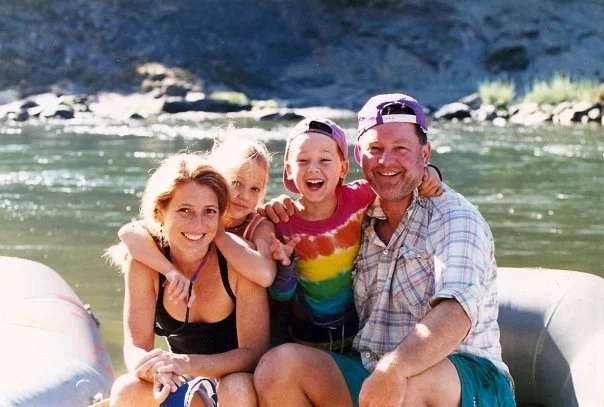
Peter and his family on the river.
“They told me, ‘You should tell your stories,’” he says. “So I started looking back at my rowing life.”
That reflection led Peter deep into the history of whitewater rowing, tracing techniques back to the 1890s and discovering how much knowledge had been lost and rediscovered over generations.
“What surprised me most was how sophisticated rowing already was in the 1930s,” he says. “These people were running thousands of miles in handmade wooden boats. A lot of that knowledge was lost and had to be learned again.”
The book brings together that history with Peter’s personal journey as a beginner, a teacher, a cutting-edge rower, and an older river runner learning new limits.
Giving Back to the Rivers
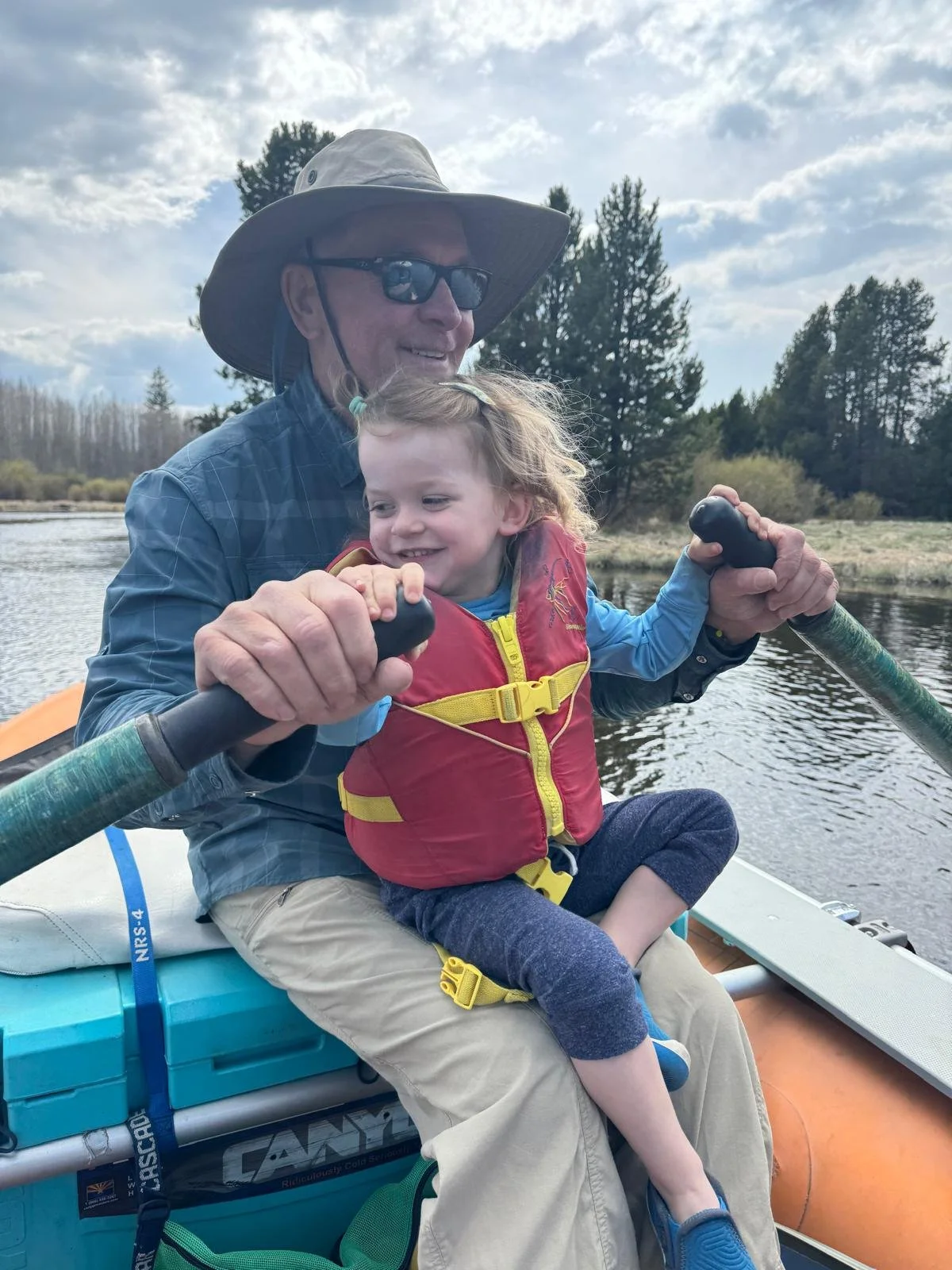
Peter teaching his granddaughter how to row.
Peter chose to donate all proceeds from the book to river conservation organizations. For him, it was a clear decision.
“I don’t need to make money off this book,” he says. “If people read it and the money that comes from it helps rivers, that’s a win-win.”
He hopes readers come away with more than stories.
“I want people to understand how deeply people have loved rivers for a long time,” Peter says. “Rivers give us a place to belong in the natural world. I hope the book helps people remember that and find a way to put it into their own lives.”
And he adds, with a laugh, that rivers are also about joy.
“A big part of river running is community,” Peter says. “Laughing together, playing music together, feeling like a kid again. That joy is part of it too.”
In the end, Let the Water Do the Work is an invitation. To pay attention. To listen closely. And to remember that sometimes, the best thing you can do is trust the current and let the water lead.
Supporting Rivers Through Story
All proceeds from Let the Water Do the Work are being donated to river conservation organizations, including Yosemite Rivers Alliance. By purchasing the book, readers are directly supporting efforts to protect, restore, and advocate for free-flowing rivers like the Tuolumne, Merced, and Stanislaus, and many others across the country.