
One river, two wounds, one path forward
What a day on the Stanislaus revealed about the damage we've inherited — and the restoration work ahead
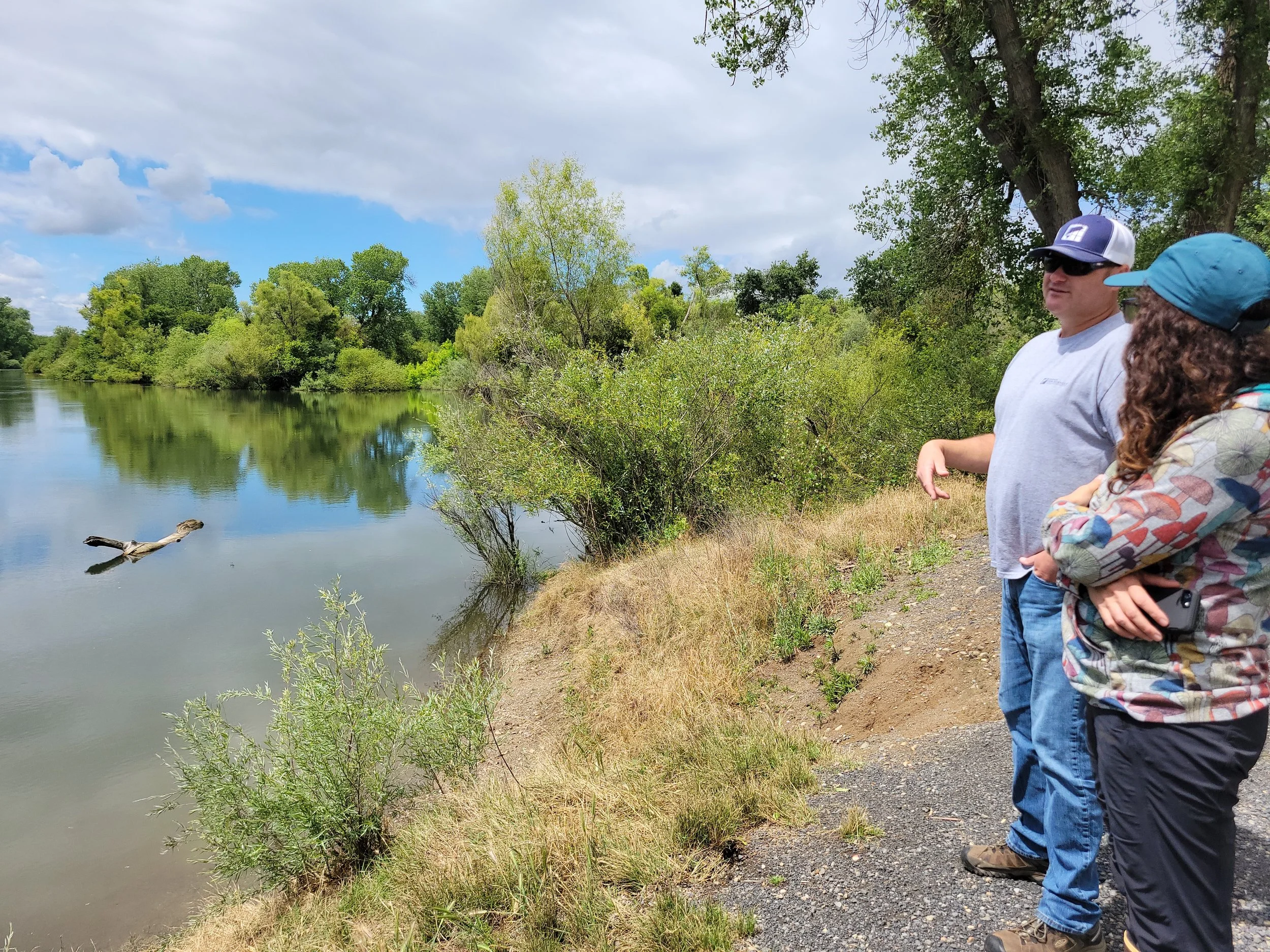
Jesse Anderson from Cramer Fish Sciences (left) and Yosemite Rivers Alliance Restoration Director Julia Stephens (right) discuss future projects alongside the Stanislaus River in Oakdale.
The Stanislaus River doesn't announce its troubles. On a spring morning, it looks alive — green banks, moving water, cottonwoods coming into leaf. But spend a day on the ground with a fisheries scientist, and a different picture emerges. One shaped not just by drought or climate, but by decisions made decades ago that the river is still absorbing today.
That's exactly what our team did on April 22nd. Julia and Patrick joined Jesse Anderson of Cramer Fish Sciences to visit two Stanislaus River sites — each telling a different story about how we got here, and what it will take to turn things around.
The legacy of extraction: Oakdale Recreation Area
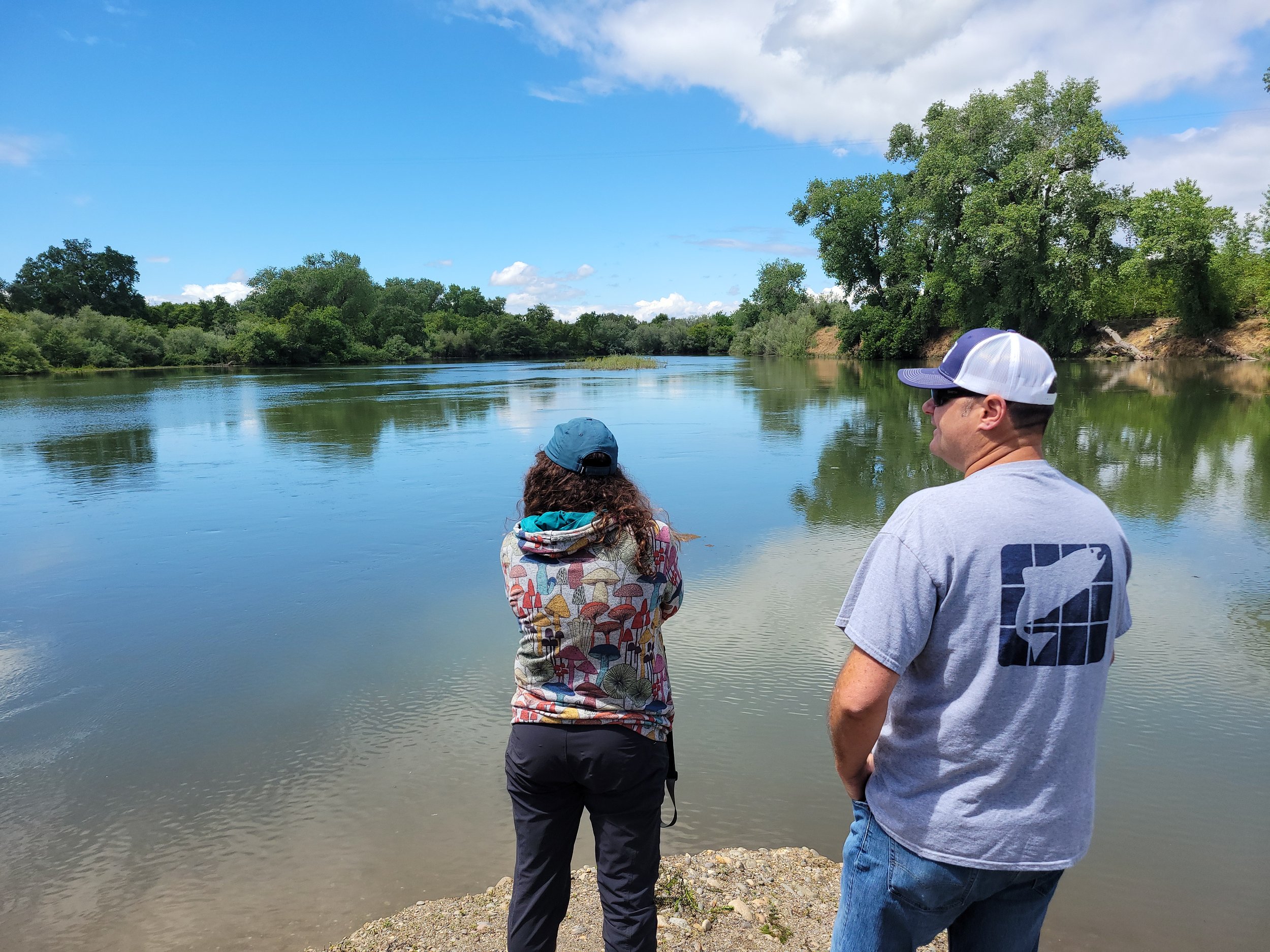
The first stop was Oakdale Recreation Area, a stretch of riverbank that draws swimmers, anglers, and families on summer weekends. It looks, at a glance, like a pleasant place. Look closer, and you're standing at the edge of something else entirely.
The large, deep ponds lining the bank are not natural features. They are the footprint of industrial in-river gravel mining — excavation pits dug decades ago, left behind when the machinery moved on. At the time, there was little scientific understanding of the damage being done, and no legal requirement to restore the river when the work stopped. So the pits remained.
What those pits became is the problem. Deep, still water is ideal habitat for striped bass, largemouth bass, and smallmouth bass — all non-native predators that eat juvenile Chinook salmon and steelhead. Every young fish navigating downstream toward the ocean runs a gauntlet past these pools.
One potential solution: fill the pits. Eliminating that predator habitat while restoring more natural channel conditions could meaningfully improve survival rates for juvenile salmonids. And because the site has become a popular — if unplanned — recreation area, thoughtful restoration here could also make it genuinely better for the people who use it. Right now it's neither optimized for fish nor for visitors. It could be designed for both.
The scale of the former mining pits was striking to stand beside. This is the kind of damage that doesn't show up in a headline. It accumulates quietly, year after year, while the fish pay the price.
The path forward: near Jacob Meyers Park
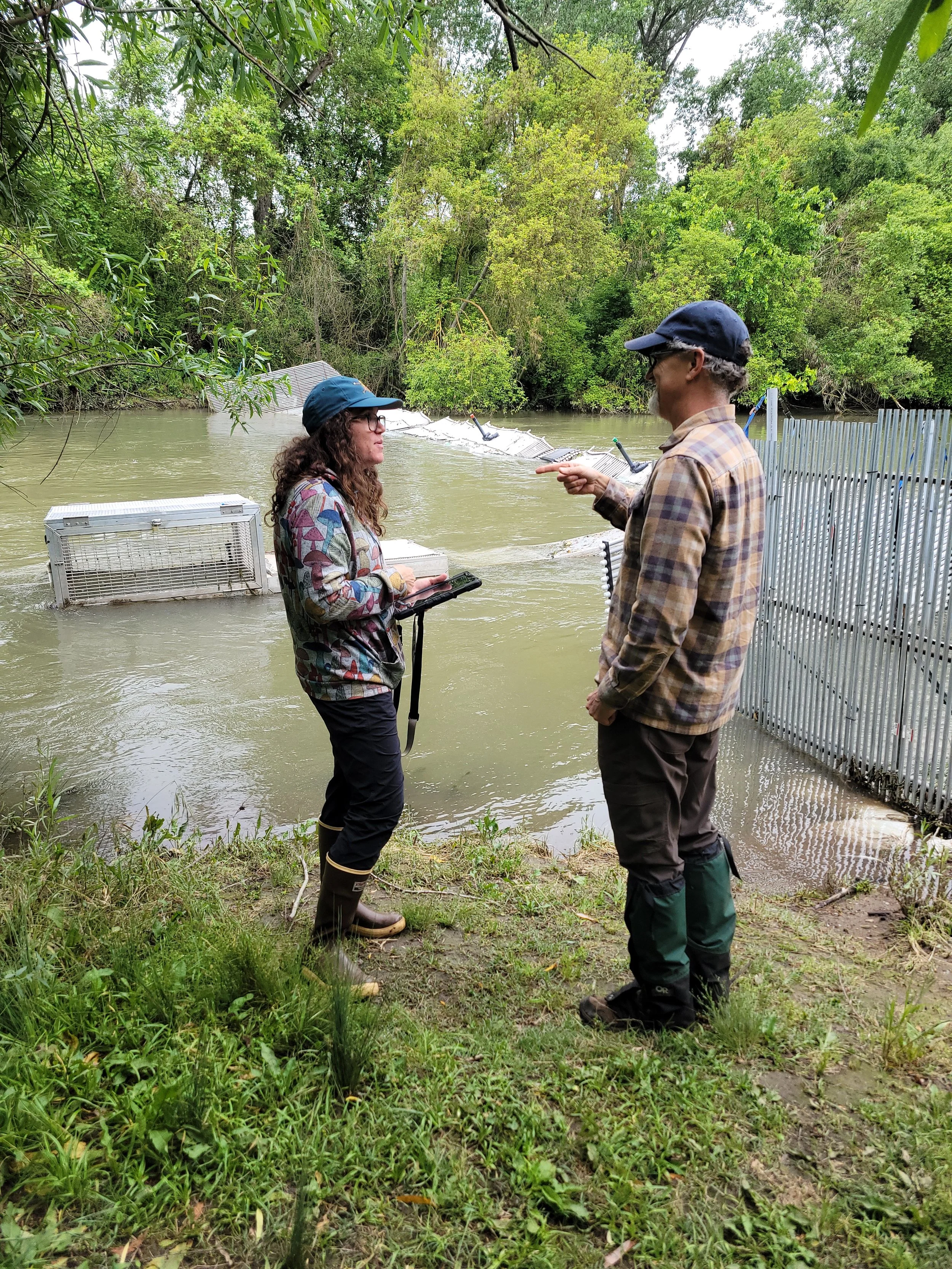
Downstream, near Jacob Meyers Park outside Riverbank, the team shifted focus from legacy harm to future habitat. This stretch of the Stanislaus is a candidate for a constructed side channel — a shallower, slower-moving corridor branching off the main river where juvenile salmon and steelhead can rest, feed, and grow before continuing their journey to the ocean.
Rearing habitat like this is exactly what's missing. Juvenile salmonids don't migrate as a sprint — they need safe staging areas, places where the current slows and predators are less concentrated. Building that habitat is one of the most direct investments we can make in the next generation of fish.
The team also visited the adult fish counting weir operated by FishBio, located nearby. Each spring, as adult Chinook salmon begin swimming upstream toward their spawning grounds, technicians count them as they pass through the weir. It's painstaking, essential science.
Those numbers matter more than they might seem. Rivers like the Stanislaus once supported more than 100,000 returning salmon each season. Today, only a few thousand make it back. The counting weir tells us whether restoration is working — whether the fish are responding. Without that data, we're guessing.
What this work is really about
A day like this one doesn't produce a dramatic before-and-after. There are no trees planted, no channels built, no ribbon cut. It's assessment and planning and partnership — the upstream work that makes restoration possible.
But that work matters. The Stanislaus River flows through the heart of California's Central Valley, nourishing hundreds of thousands of acres of farmland and communities that depend on it. The Chinook salmon that once filled it by the hundreds of thousands are still trying to come home. And the people who study, plan, and fight for this river are still at it — visit by visit, site by site.
We're grateful to Jesse Anderson and Cramer Fish Sciences, and to FishBio for their ongoing monitoring work. The Stanislaus deserves partners like these. So do the fish.
Want to support restoration work on the Stanislaus and the rivers of the Yosemite Region? Join the Alliance at yosemiterivers.org/join
