
A frog named Twain and 10,000 reasons to celebrate
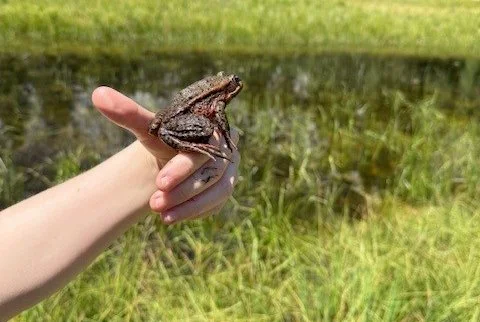
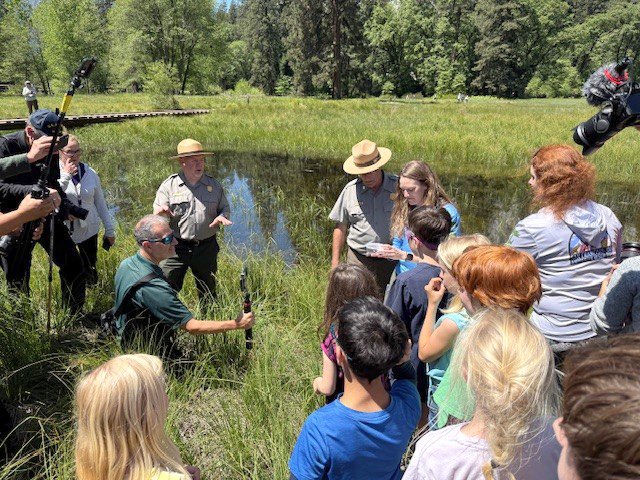
Photo credit: California Department of Fish and Wildlife
On a bright morning in Yosemite Valley, a small frog with a reddish belly and soft, quiet call slipped into the water near Yosemite Falls. His name is Twain — the 10,000th California red-legged frog released into the park through a decade-long recovery effort that has quietly rewritten what's possible for wildlife in the Yosemite Region.
It's a milestone worth savoring. And a story worth telling.
A species that disappeared — and came back
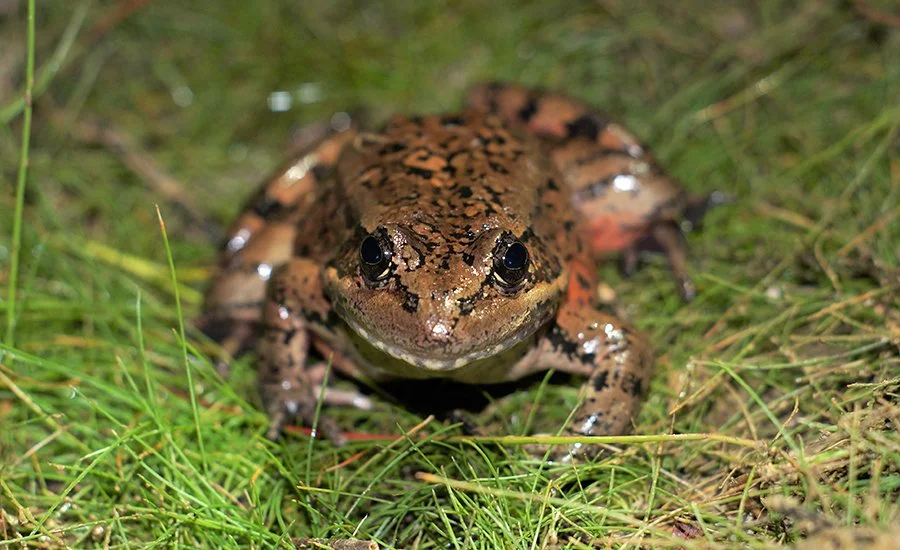
The California red-legged frog, the largest native frog in the western United States, was once common across the Sierra Nevada foothills and into Yosemite. Then it vanished. Invasive American bullfrogs — introduced to the park and far more aggressive — drove them out. Elevated raccoon populations, fueled by open refuse sites that weren't closed until the 1970s, compounded the loss. By the time anyone took stock, the red-legged frog was gone from Yosemite Valley entirely. Federally listed as threatened. Out of sight, and nearly out of mind.
Recovery seemed ambitious. But a coalition of partners decided to try anyway.
Ten years of quiet, determined work
In 2016, the National Park Service and the San Francisco Zoological Society opened a dedicated frog-rearing facility in San Francisco. Staff collect wild frog eggs, raise them to one- and two-year-old juveniles in a controlled environment, then release them into carefully restored wetlands and streambanks in Yosemite Valley. Meanwhile, park crews spent years removing invasive bullfrogs and restoring habitat through the Merced River Plan — rebuilding the wetlands, streambanks, and river systems the frogs need to thrive.
It's painstaking work. It doesn't make headlines every year. But it accumulates.
"When the program began in 2016, no California red-legged frogs remained in Yosemite Valley," said Dr. Rochelle Stiles, director of field conservation at San Francisco Zoo & Gardens. "Today, every frog in the valley traces back to this effort. Despite drought, severe winters and flooding, the population has proven resilient."
This year alone, the zoo plans to release about 830 juvenile frogs — with roughly 600 more eggs already in rearing for future seasons.
What collaboration actually looks like
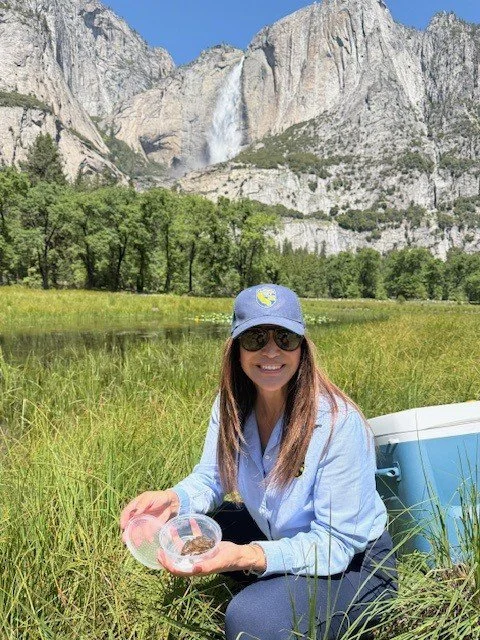
Photo credit: California Department of Fish and Wildlife
Stories like this one can sound simple in hindsight: problem identified, solution implemented, species recovered. But the reality is far messier, slower, and more human. The California red-legged frog's return to Yosemite required the National Park Service, U.S. Fish & Wildlife Service, California Department of Fish and Wildlife, San Francisco Zoo & Gardens, Yosemite Conservancy, the Wildlife Restoration Foundation, and a private landowner named Diane Buchholz — who allowed researchers to collect eggs from her property in Garden Valley — all working in the same direction, across years and budget cycles and shifting priorities.
That kind of sustained collaboration is rare. And it's exactly the model that works.
"This milestone reflects years of focused work to restore a species that plays an important role in the park's ecosystem," said Rob Grasso, aquatic ecologist at Yosemite National Park. "After invasive bullfrogs eliminated red-legged frogs from the area decades ago, we removed those threats and created conditions for recovery. Today, multiple generations of frogs are established in Yosemite Valley."
Why it matters beyond the milestone
The California red-legged frog isn't just a conservation success story. It's an indicator — a signal of what healthy rivers, wetlands, and watersheds can support when they're given the chance to recover. These frogs live at the edge of water. They need clean streams, intact riparian vegetation, and the kind of ecological balance that supports hundreds of other species too.
At Yosemite Rivers Alliance, we know this territory well. The Merced River — one of the three rivers at the heart of our work — flows through the valley where Twain now swims. The habitat restoration that made this recovery possible is the same kind of work we champion every day: restoring meadows, protecting streambanks, improving water quality, and building the conditions for life to return.
More than 600 wildlife species depend on the rivers and lands of the Yosemite Region. When one comes back, it matters for all of them.
A name worth noting
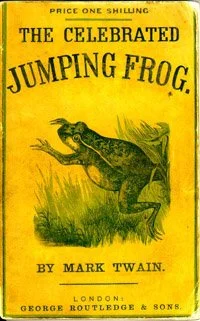
The 10,000th frog was named Twain — a nod to Mark Twain, who made the California red-legged frog famous in his 1865 story The Celebrated Jumping Frog of Calaveras County. It's a fitting full circle: a species that once inspired American literature, nearly lost, now restored to the landscape that shaped it.
We'll take that as a good sign.
Yosemite Rivers Alliance protects and restores the rivers and lands of the Yosemite Region — including the Merced, Tuolumne, and Stanislaus rivers — through action, collaboration, and stewardship. Stories like this one remind us why that work matters.
Want to support wildlife recovery in the Yosemite Region? Join the Alliance today.
