
Wild Chinook are coming home to the Tuolumne, Stanislaus, and Merced. Here's where to watch, and how to get our free field guide.
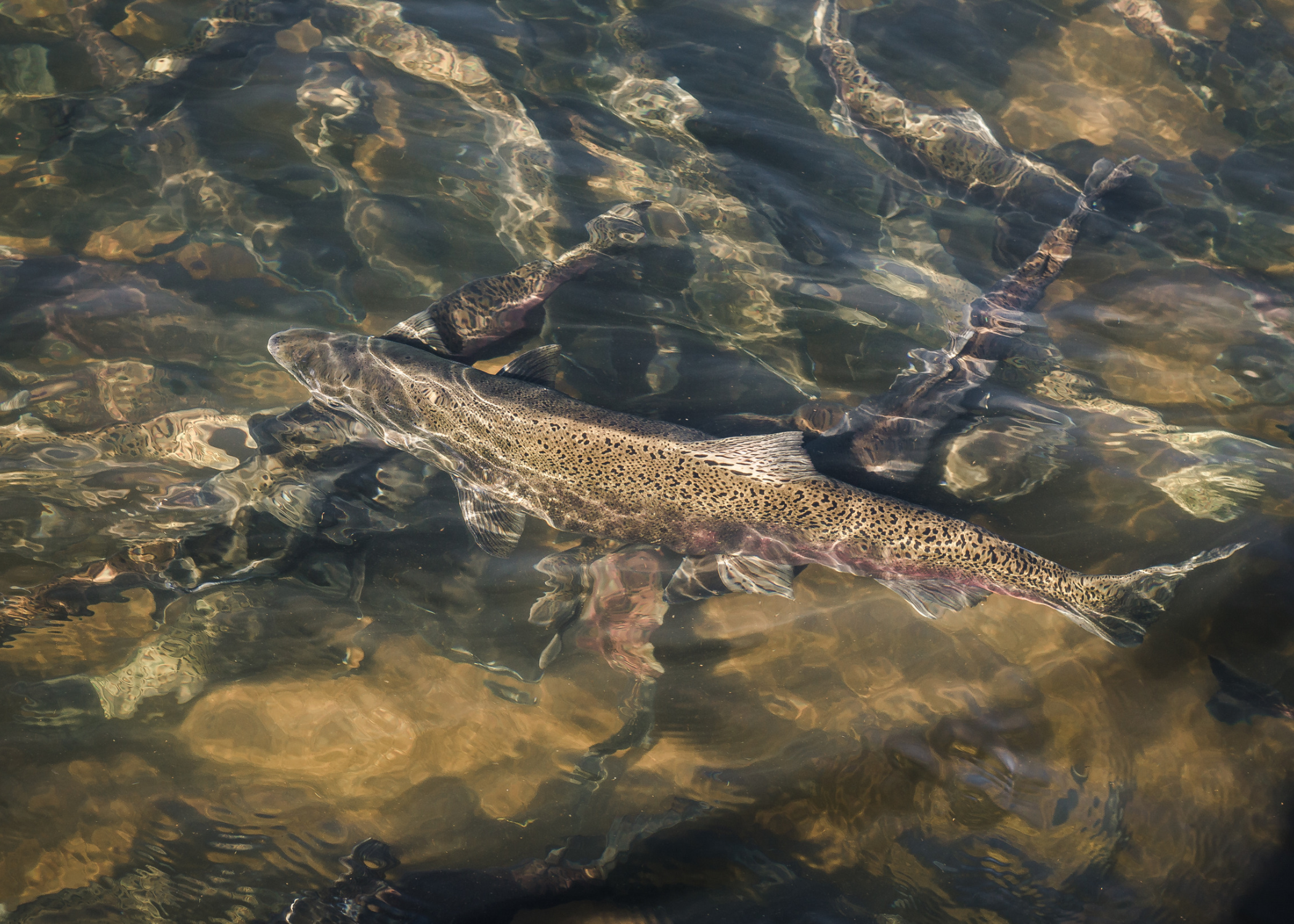
Stand on a quiet riverbank in the Sierra foothills this November and watch the shallows. At first, you'll see only water sliding over gravel. Then a shadow holds steady against the current. A tail breaks the surface. A flash of red turns in the riffle.
It's a Chinook salmon, and it has come a very long way to be here.
A journey of hundreds of miles
Every fall, Chinook salmon, the largest of the Pacific salmon, leave the ocean and swim hundreds of miles inland. They pass under the Golden Gate, wind through San Francisco Bay and the Delta, and push up the San Joaquin into the rivers that flow out of the Yosemite Region.
They stop eating once they leave the sea, running on fat stored up over a few years in the Pacific. Their goal is the very stretch of gravel where they hatched.
When they arrive, a female sweeps her tail against the riverbed to dig a nest called a redd. She lays her eggs, a male fertilizes them, and she covers them with gravel. Then she stands guard until her strength runs out. Chinook spawn once and die, and their bodies feed everything from insects and otters to the streamside trees that shade the next generation.
The season runs from early October through December, and it usually peaks in November. That means right now is the best time all year to see it for yourself.
Where to go: seven spots on three rivers
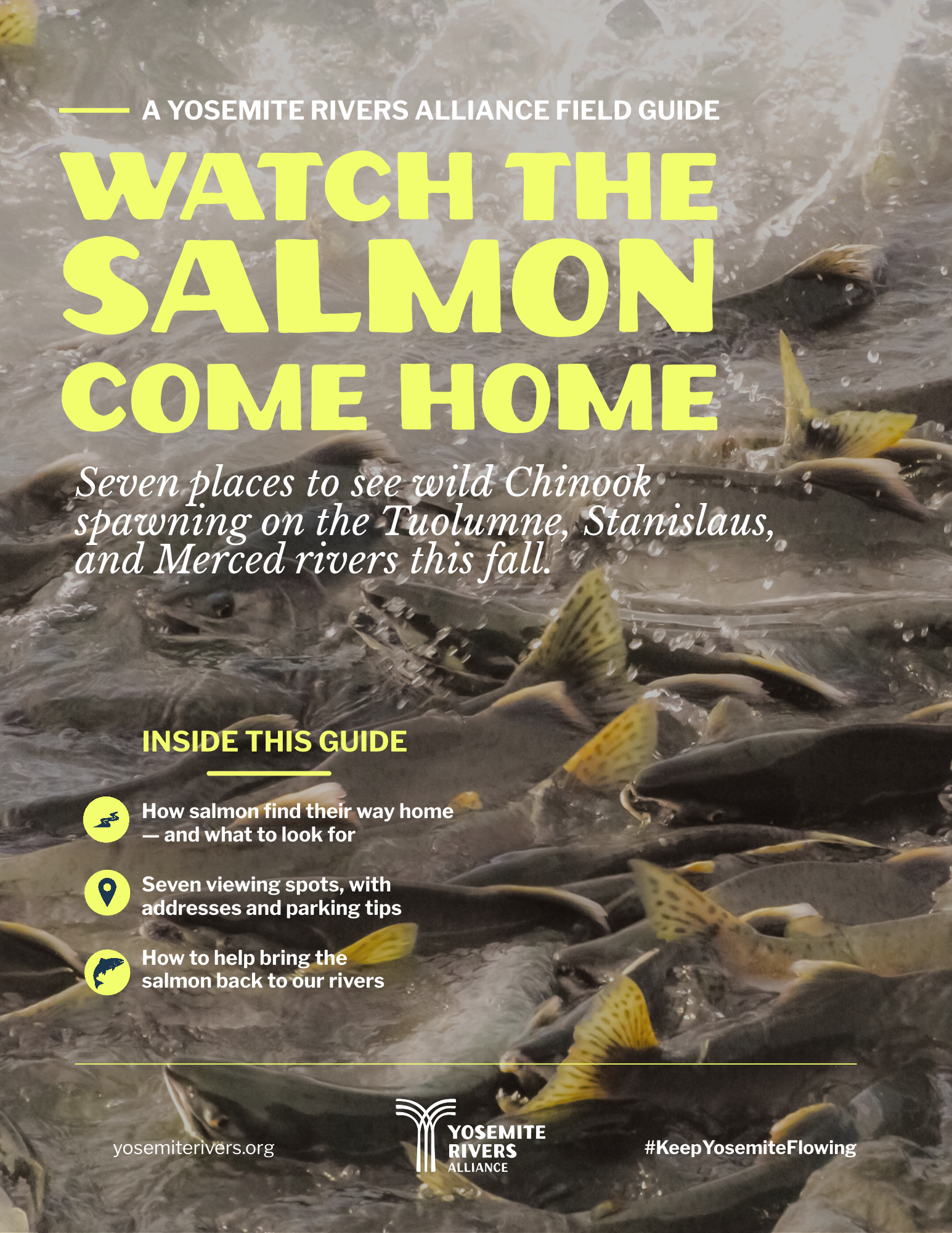
Our new Salmon Spotting Guide maps seven public places to watch the run, all within a few hours' drive of the Bay Area. Here's a taste of what's inside.
On the Tuolumne River at La Grange, explore around the historic 1914 Old La Grange Bridge, where short trails lead down to clear, shallow riffles. If you're up for a walk, follow the river downstream from the J59 bridge onto county land. That's where our own restoration work is underway right now, so you can see salmon habitat being rebuilt in real time.
On the Stanislaus River at Knights Ferry, you can look straight down into the water from the Sonora Road bridge. Or park at the Visitor Center and walk upstream past the historic covered bridge, the longest west of the Mississippi, to overlooks above the river. A little downstream, the Horseshoe Road Recreation Area near Oakdale has a cottonwood-lined trail with several spots to reach the water's edge.
On the Merced River near Snelling, Henderson Park offers easy access to the river right in town. A few miles east along Merced Falls Road, two quieter public access points lead down to the riverbank.
The free guide includes addresses, parking tips, and what to expect at each spot.
Download the free Salmon Spotting Guide
Tips for a great salmon outing
Go on a sunny day around midday, when light reaches the riverbed and fish are easiest to see.
Bring polarized sunglasses and binoculars. They cut the glare and bring the action closer.
Look for pale patches of clean gravel. Those are redds, and salmon are often holding nearby.
Stay out of the water and off gravel bars. Eggs are buried just under the surface, and one step can crush a nest.
Leave carcasses where they lie. They carry ocean nutrients deep inland, feeding the whole river.
Why every salmon counts
These rivers once carried more than 100,000 salmon each. Today, only a few thousand make it home. Dams, altered flows, and lost habitat have pushed the runs to the edge.
But salmon are resilient. Give them cold water, clean gravel, and shaded banks, and they come back. That's the work we've done for more than 40 years, alongside communities, tribes, agencies, and partners.
Healthy salmon runs mean healthy rivers. And healthy rivers carry drinking water to more than 3 million people and support more than 600 wildlife species.
Be part of the flow
This is a rare chance to see one of nature's great migrations close to home. Grab the guide, pick a sunny day, and go see the salmon.
Share your sighting. Tag us @yosemiteriversalliance with #KeepYosemiteFlowing, or email your photos to staff@yosemiterivers.org.
Help more salmon make it home. Your gift powers restoration on the very rivers where they spawn.
