
Bringing the river home, one bend at a time
A quarter-mile of new river channel opened at La Grange this summer, the culmination of years of work and a partnership that reaches across, non-profits, land stewards, Tribes, agencies, anglers, engineers, and neighbors.
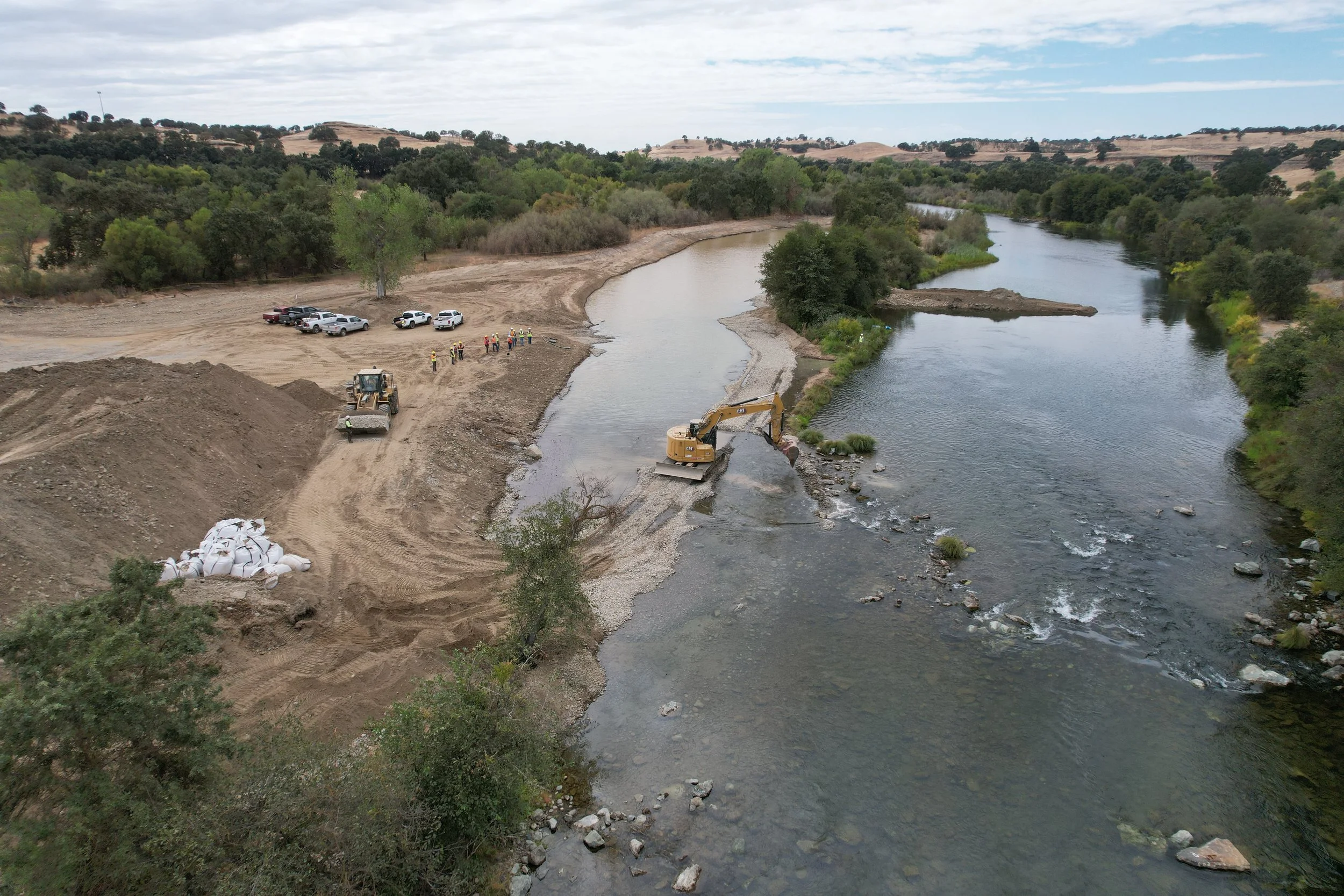
On Friday, September 4, an excavator lifted one last bucket of gravel from the bank of the Tuolumne River. Then the machines went still, and everyone watched. Water slipped past the cut, paused, and began to fill a quarter-mile of channel that had not existed a season before. For the first time, the Tuolumne spilled into a new meander built to bring salmon home.
People cheered. A few of us got a little emotional. After years of grant proposals, design, permitting, and one long, hot summer of construction, the river was finally allowed to do the thing it does best: wander.
A river that lost its shape
For nearly two centuries, this stretch of the Tuolumne has been held to a path it never chose. Gold mining tore through the banks and left them heaped with tailings. Later, dams reshaped the flows. The river kept carrying water downstream, but it lost the bends, gravel bars, and floodplains that salmon and trout need to spawn, rest, and grow.
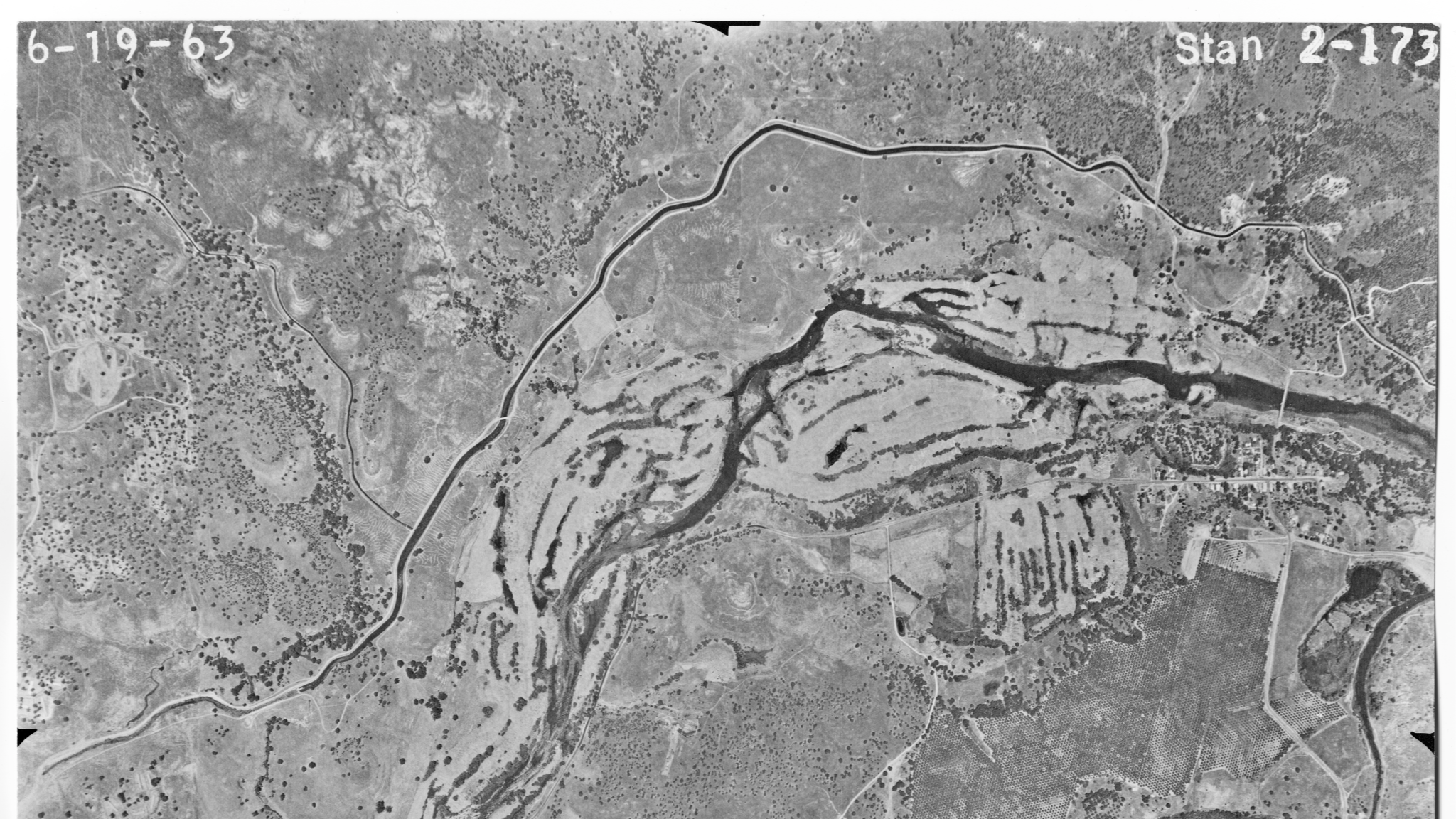
A roughly 1960 aerial of the project area shows mining tailings piled along the banks, with the river pushed north of where it sits today into a narrow path shaped by the mining. Those same tailings were later scraped up and hauled away as material for the New Don Pedro Dam, leaving barren, cobble-armored banks along the river.
You can still read that history in the land. Restoration Director Julia Stephens surfaced the aerial above on the morning of the connection, a reminder of just how far this ground has come, and how far the work still reaches.
The stakes are easy to feel once you know them. The Tuolumne's yearly salmon runs, when fish surge upriver from the sea to spawn, once saw well over 100,000 fish in this reach of the river; these days a good year sees only a few thousand return. Fish that make it this far upriver find long, straight stretches of water with little gravel to spawn in and minimal healthy habitat for their young to grow. Restoring a salmon run means restoring the river those salmon need. That is the work at La Grange.
What the crews built this summer
Over a single hot summer, construction crews excavated the new channel, graded the banks and new floodplain and laid down clean spawning gravel in the new channel. This phase is one piece of a multi-year salmonid habitat restoration project at La Grange, designed to rebuild rearing and spawning habitat for Chinook salmon and Steelhead. It adds a new channel meander, gravel spawning riffles, and several acres of floodplain that will soon be replanted with native trees, shrubs, and wetland plants.
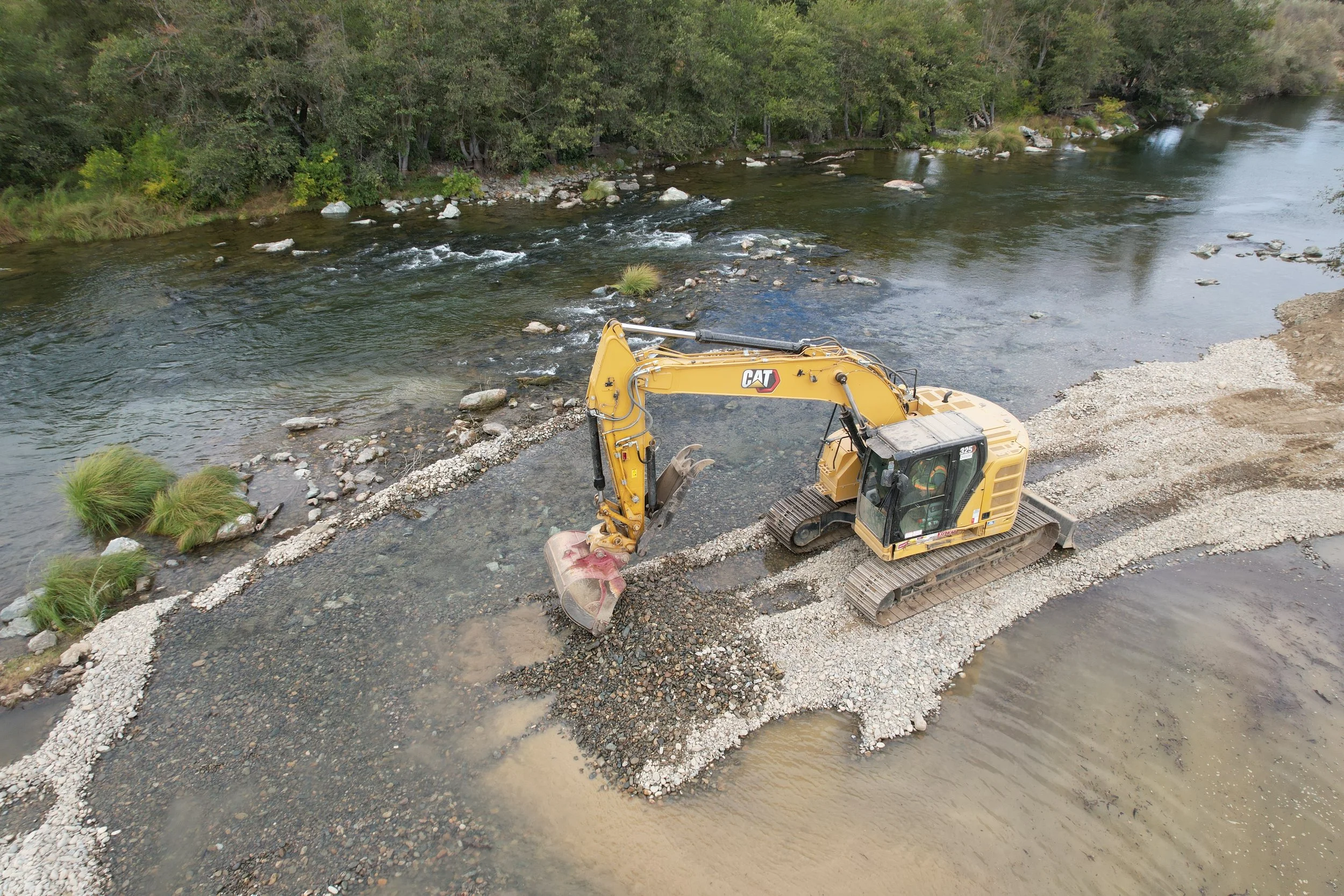
An excavator works to lift gravel from the bank of the Tuolumne River.
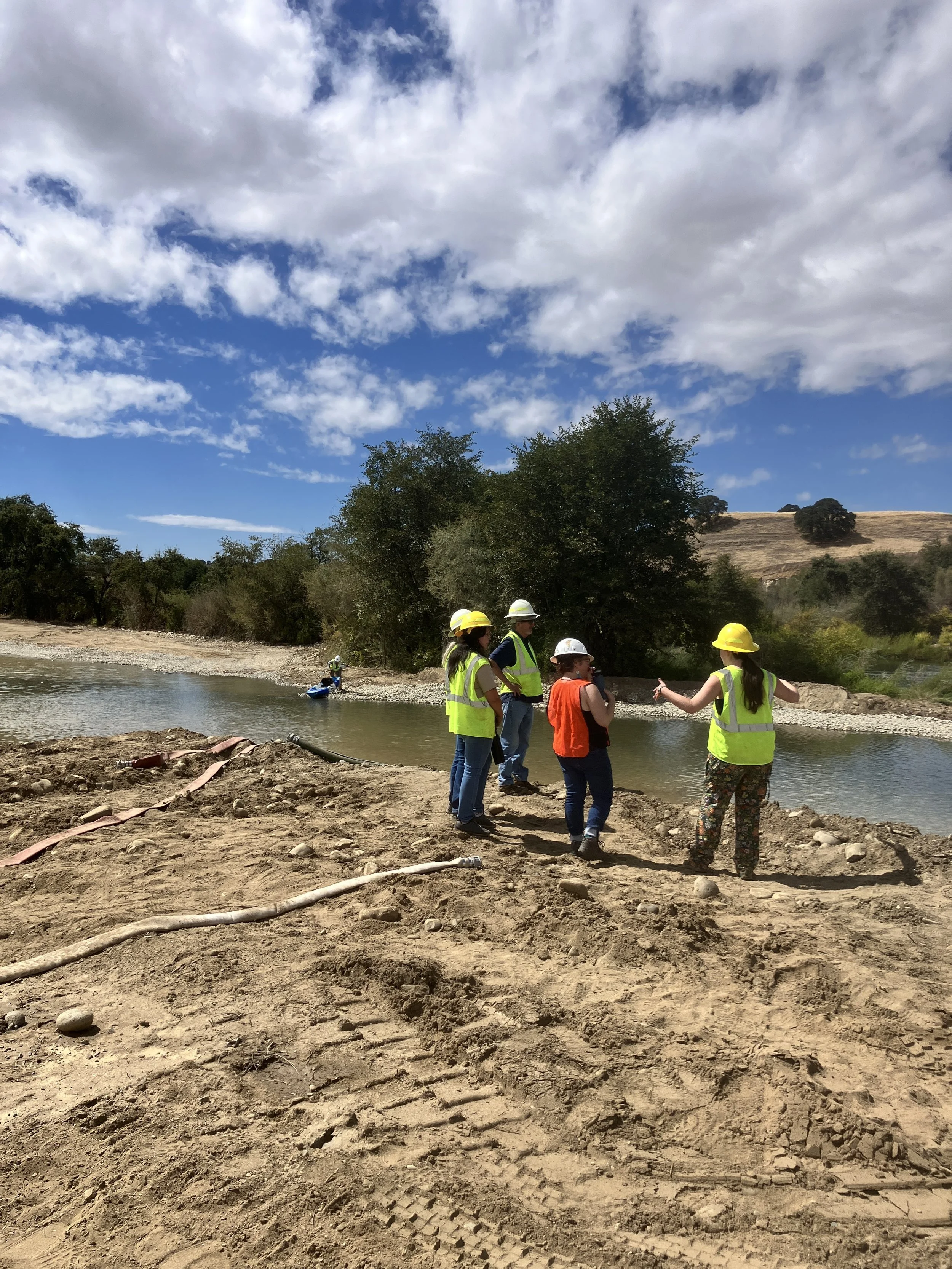
Staff, project partners, and local community members gather to watch water move through the newly formed channel, standing on ground that will soon become revegetated floodplain.
The floodplains were shaped with intention. They sit low enough to flood in winter and spring, precisely when juvenile fish need calm, off-channel water to feed and hide from larger predators. In future seasons, photos of this same spot will show green returning as the plantings take hold.
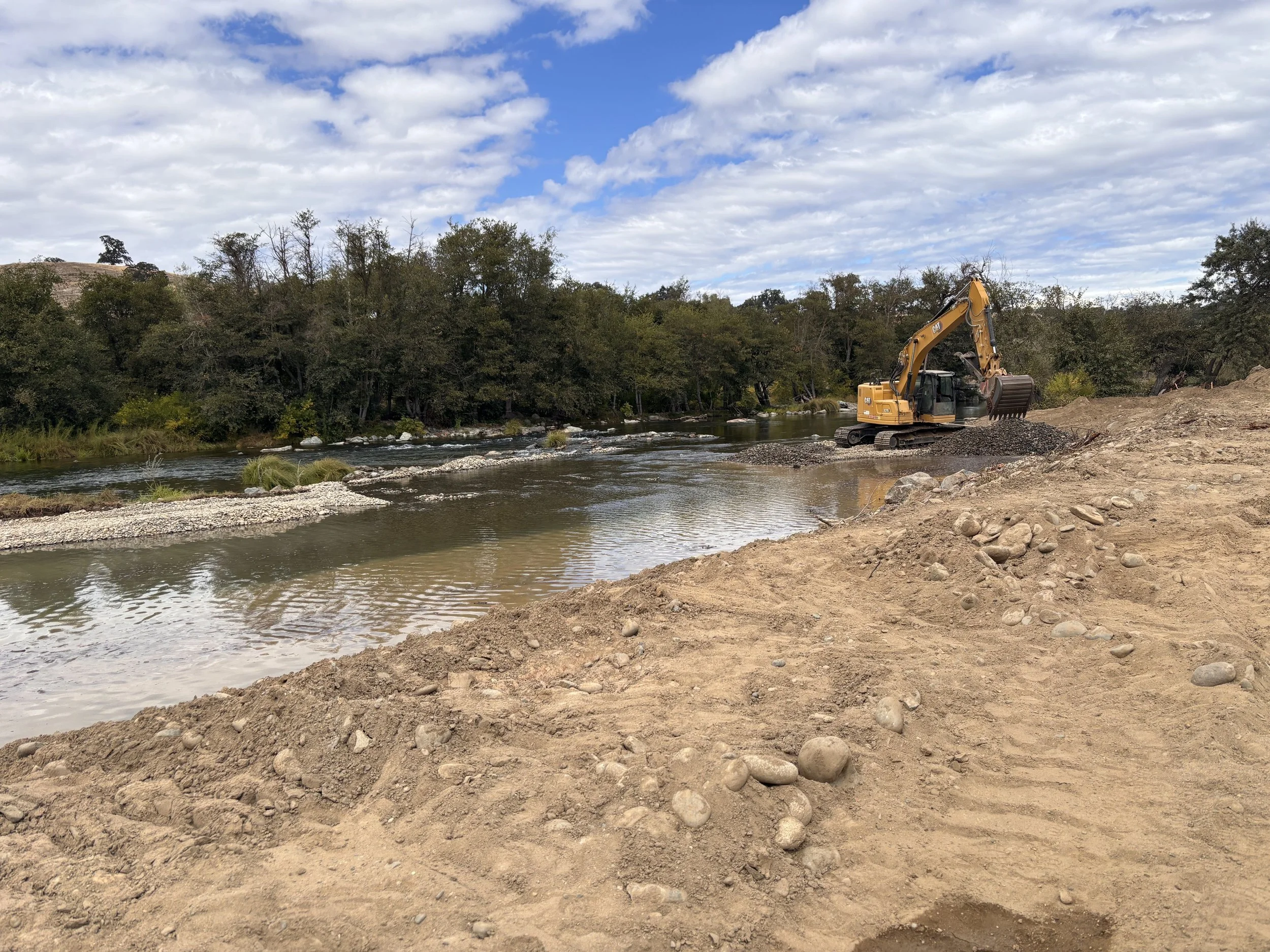
Looking upstream at the entry point, where the Tuolumne's existing path feeds into the new channel.
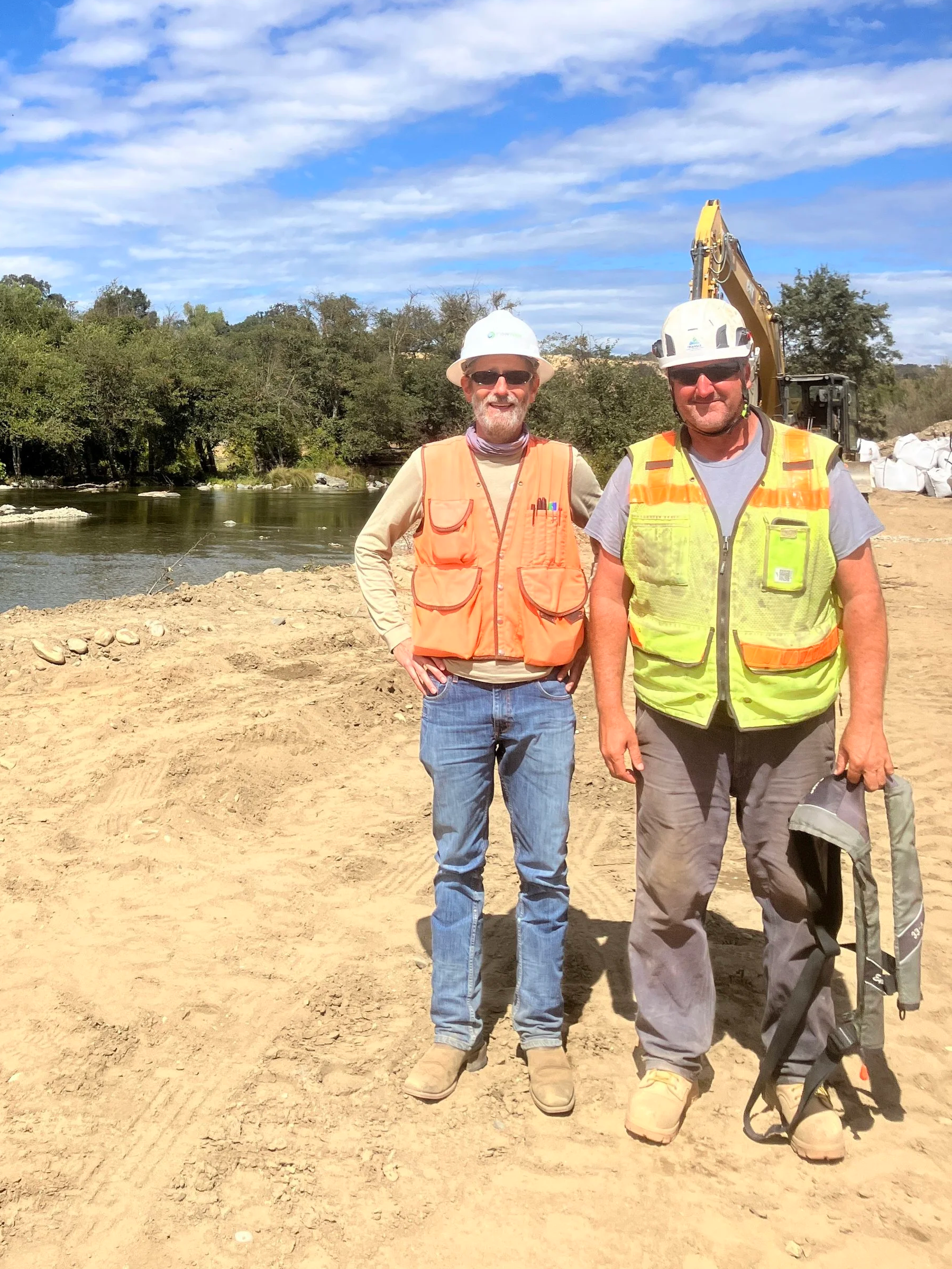
Mark Tompkins (left), principal engineer for FlowWest, and Michael Peterson (right), construction foreman with Triangle Land Restoration.
"Watching the excavator artfully open the new channel meander to the flowing Tuolumne was a truly satisfying moment," said Mark Tompkins, principal engineer with FlowWest. "For so long this river has been locked into a path dictated by old abuses. On this day we gave some power back to the Tuolumne. Power to carve new paths, to inundate floodplains, and to support more salmon."
For our team, the feeling was pride. "I felt pride in my team and our project partners for their highly coordinated work that carried us to this milestone," Julia said. Ask her what success looks like three years out, and she points downstream in time: banks and side channels thick with native plants, floodplains alive with water when young fish need it most, and the next phase of the project already adding acres of habitat.
Still flowing, still just the beginning
A few days later, on September 9, crews completed a berm across the former main channel. The Tuolumne now runs fully through its new meander. Soon, salmon will make their ancient journey from the sea back upriver, and this new habitat will be waiting for them.
This is a milestone, not a finish line. Over a century of mining, altered flows, and hard use don't heal in one summer. A third phase is already on the horizon, adding still more meanders, side channels, and floodplain to the picture, building complexity back into a river that spent generations flattened into a line.
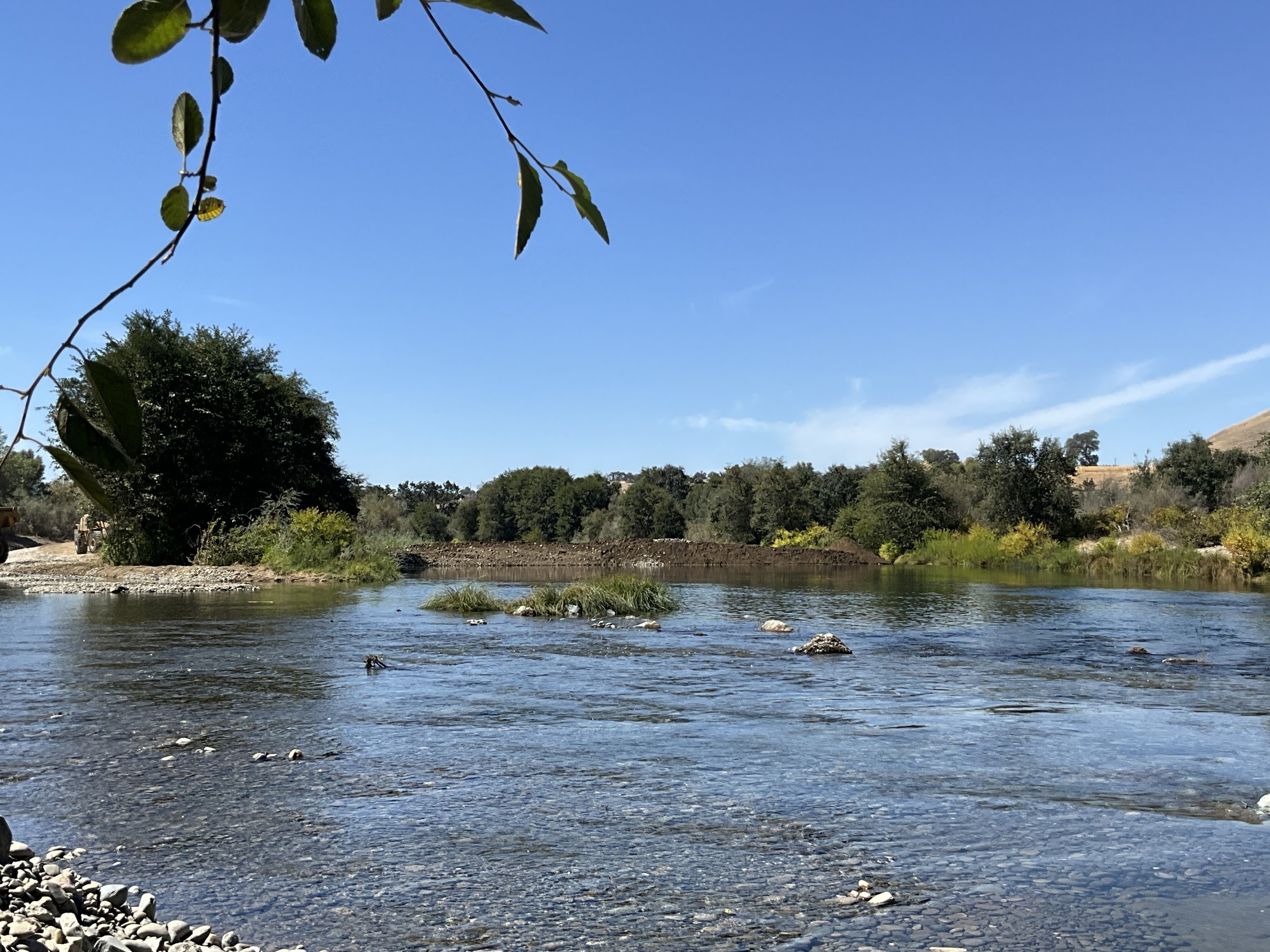
The new meander, fully flowing (left) with the plug taking shape on the right to steer the river and restore the former channel.
This happened because of you
No single organization restores a river. The partners who stood on the bank on September 4 each brought something the project could not have happened without.
To FlowWest and Applied River Sciences, whose engineers designed the floodplains and new channel, and Triangle Land Restoration, whose crews built it. To Chicken Ranch Rancheria Mi Wuk who are working alongside us to carry out this restoration, and to local Tribes who have supported this effort and whose ancestral land this is. To the advocates who bring their knowledge, hands, and heart to this watershed, among them the Stanislaus Fly Fishers, the Merced-Tuolumne Salmon Alliance, and the Upper Merced Watershed Council. And to Stanislaus County Parks and Rec and the landowners who opened their ground to make room for a wilder river. Thank you.
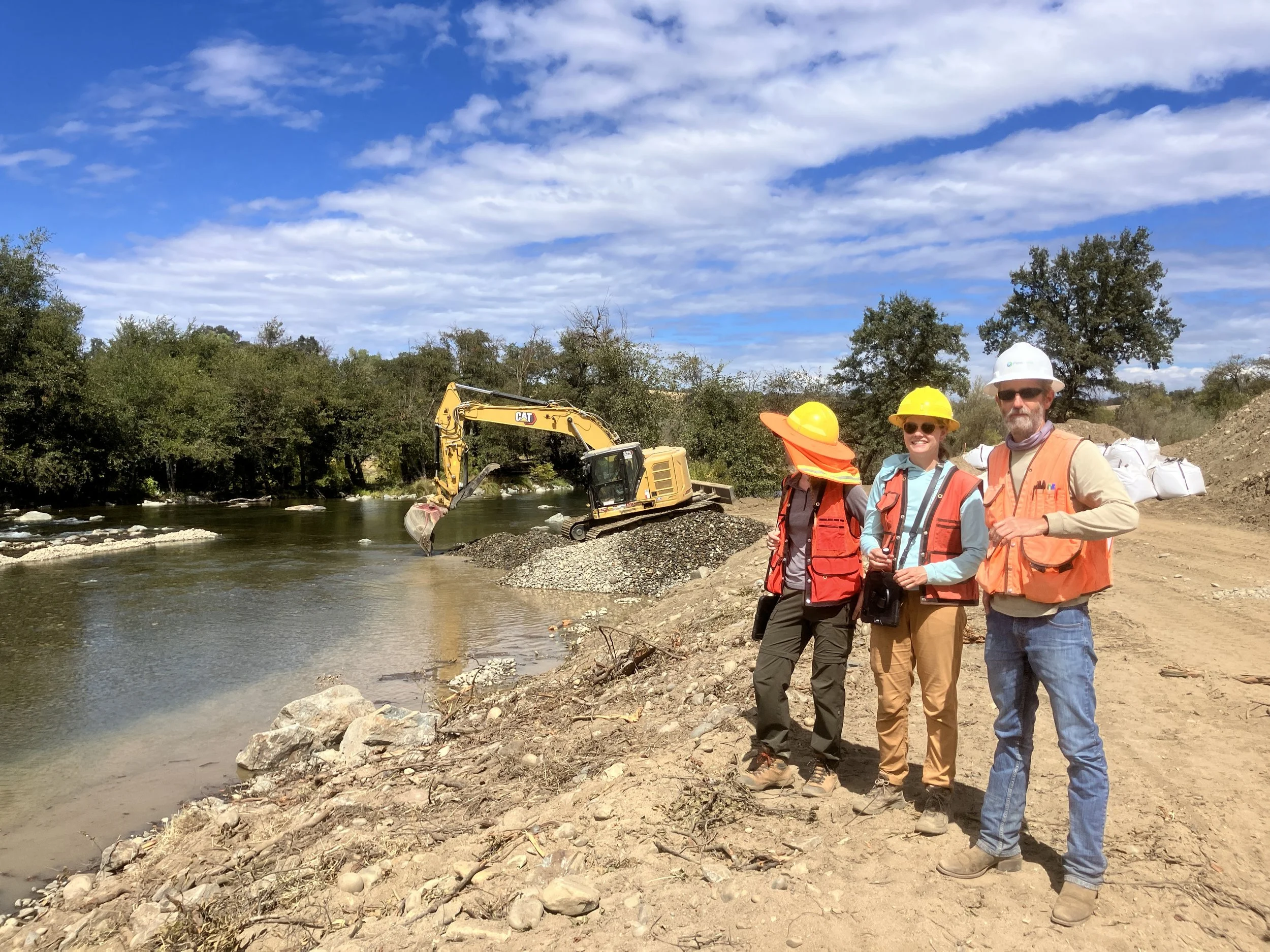
Sarah and Cailey, Yosemite Rivers project managers, stand with FlowWest principal engineer Mark Tompkins as the meander is activated.
This work is funded through grants from the California Wildlife Conservation Board, National Fish and Wildlife Foundation, California Department of Fish and Wildlife (Office of Spill Prevention and Response), Bonneville Environmental Foundation and through the members who stand with us year after year. To everyone who gave, volunteered, or simply believed the Tuolumne deserved better: this quarter-mile of new river is yours too.
You didn't just fund a project. You gave a river back some of its power. And when the first salmon nose into that new gravel to spawn, they will be swimming through what your support made possible.
Want to help carry the next bend? Stand with us for the Tuolumne and help keep Yosemite flowing.
