A Wild Journey North: California Elk, Tribal Land Return, and the Power of Connected Landscapes
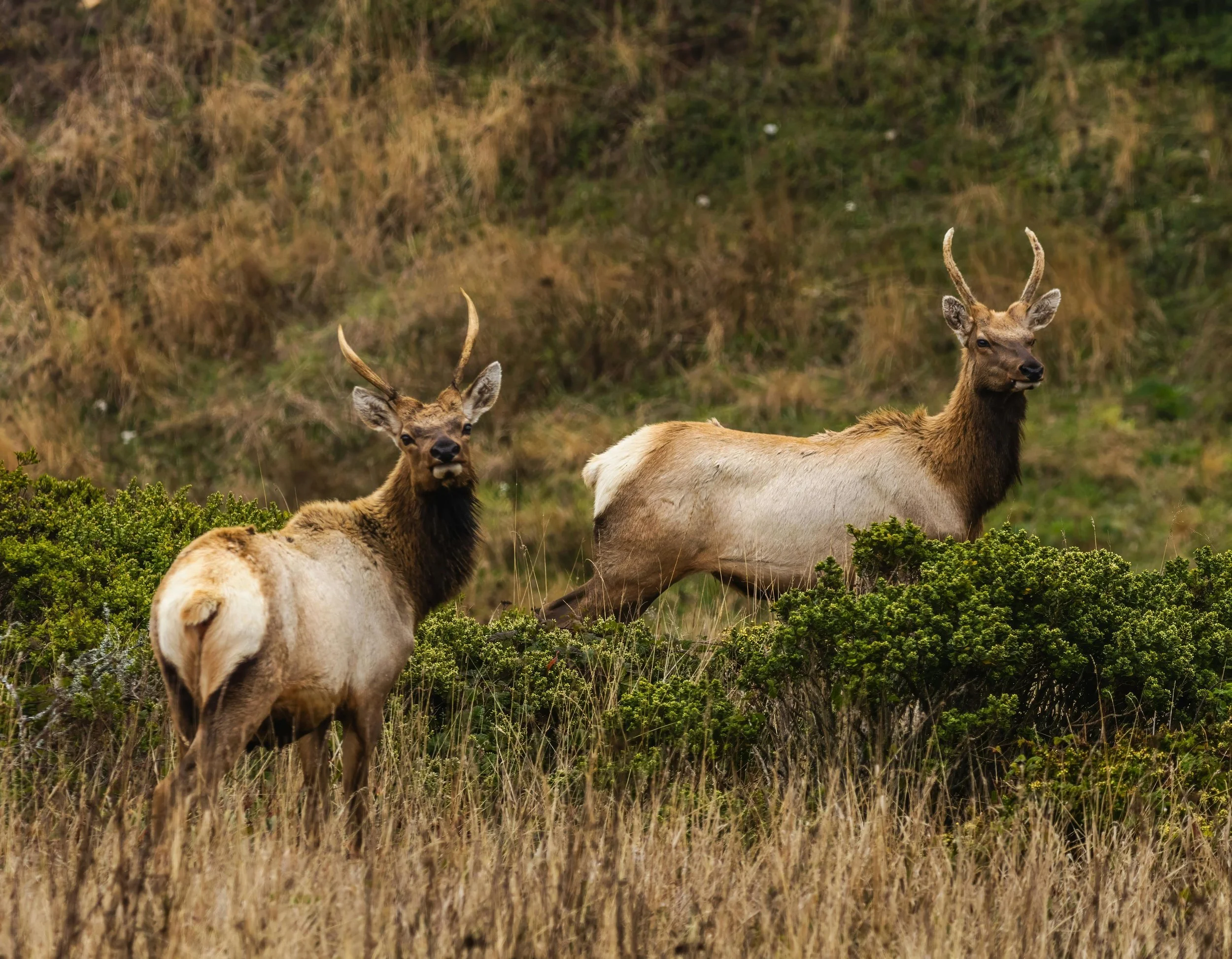
Something remarkable happened along the Tuolumne this fall.
A bull elk, tracked by the California Department of Fish and Wildlife (CDFW), wandered into the Snelling area after traveling more than 230 miles from the Tehachapi herd — a journey that connects mountain, valley, and river in a single, awe-inspiring line.
Our friend Ron captured a short video of the elk as it passed through the region and confirmed with CDFW that it came from the Tehachapi herd, which roams the southern foothills of the Sierra Nevada. The agency is monitoring the animal’s northward movement — a rare event that highlights the importance of wildlife corridors and habitat connectivity across California.
(Out of respect for wildlife safety and privacy, we’re keeping the exact location vague. Please help protect this elk by sharing responsibly and avoiding detailed place names.)
A Return of Land — and Spirit
This sighting comes just days after historic news: California has returned 17,000 acres of ancestral land to the Tule River Indian Tribe — an act of justice and restoration that also includes plans to reintroduce Tule elk to their traditional homelands.
Read the full story in the LA Times →
The Tule elk holds deep cultural significance for many Indigenous communities across the state. For the Tule River Tribe, the elk’s return represents more than an ecological restoration — it’s a renewal of relationship between people, animals, and the lands that sustain them.
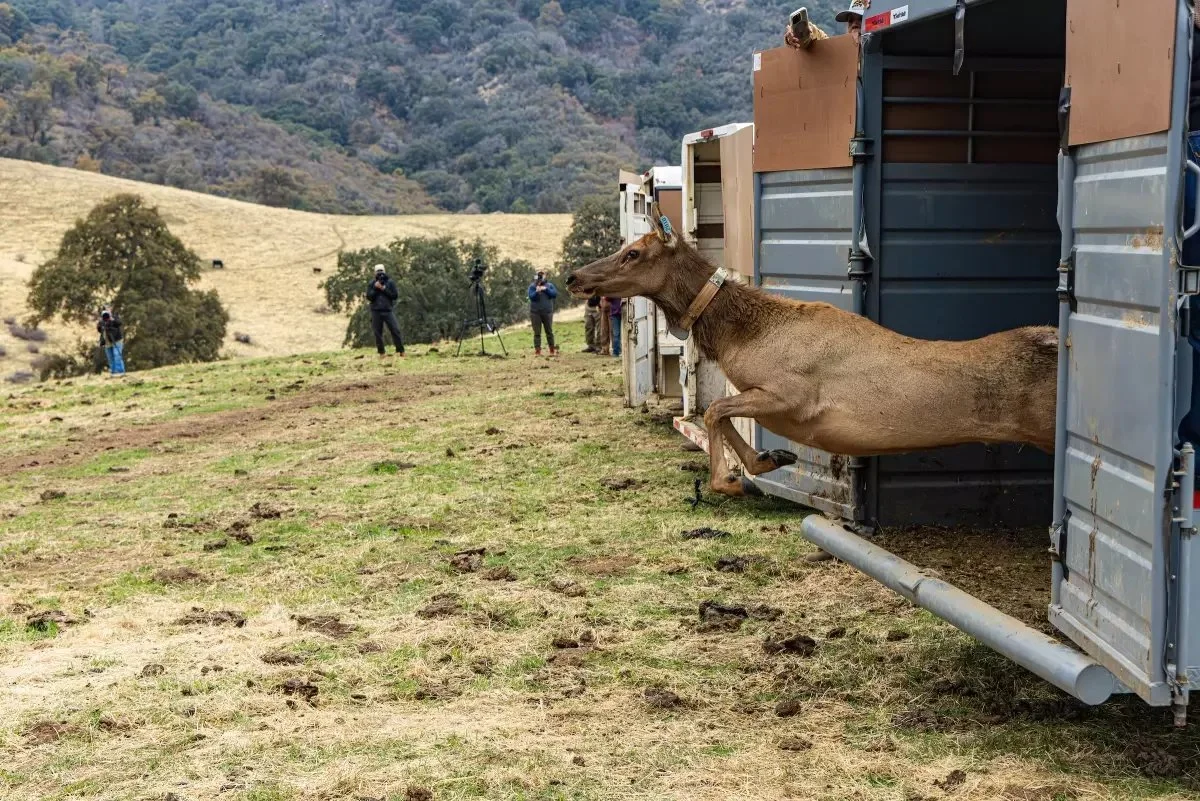
Tule elk are released onto the Tule River Indian Reservation in Tulare County on Oct. 22.(Travis VanZant / California Department of Fish and Wildlife)
The Story of Elk in California
Once numbering an estimated half-million, Tule elk ranged widely across California — from the Central Valley grasslands to the coastal hills and Sierra foothills. By the late 1800s, habitat loss and over-hunting had nearly wiped them out.
A small remnant herd survived in the southern San Joaquin Valley, and through careful protection and reintroduction, the species rebounded from near extinction.
Today, about 5,700 Tule elk roam the state across 22 managed herds — a powerful example of how long-term conservation can bring species back from the brink.
Recent research also suggests that Rocky Mountain elk historically roamed the Sierra Nevada range, broadening our understanding of elk ecology in California. The return of these wide-ranging animals to their ancestral paths reminds us how dynamic and resilient this landscape truly is.
Why This Journey Matters
The northward trek of this bull elk is more than an impressive migration — it’s a symbol of hope for connected, living landscapes.
Every mile this animal travels tells a story of habitat linkage, riparian restoration, and ecological resilience — the same values that guide our work at Yosemite Rivers Alliance.
Healthy rivers create healthy corridors. Floodplains, meadows, and forests work together to sustain both salmon and elk, otters and oaks, and the communities who depend on these systems for clean water and climate stability.
Seeing this animal move freely through the watershed reminds us why we do what we do: to keep these connections intact — from Yosemite’s high country to the Valley floor.
A Shared Responsibility
If you’re lucky enough to glimpse this elk or others on the move, please admire from a distance. Elk can travel long stretches seeking habitat, and every undisturbed step helps ensure their safety.
You can also help by supporting river and habitat restoration projects that strengthen the natural corridors wildlife rely on. Every acre restored, every invasive plant removed, every floodplain reconnected contributes to this larger, living network.
This bull’s long journey — from Tehachapi foothills to the Tuolumne-Merced region — reminds us that the story of California’s rivers is also the story of its wildlife.
When we restore flow, we restore movement. When we protect connection, we make space for life — in all its wild, wandering forms.
Further Reading & Sources